
Pinellas County Top-Rated Insulation Contractor
Serving St. Petersburg, Clearwater, Largo, and 11 more Pinellas County communities — with the most detailed Duke Energy rebate handling of any insulation contractor in the county. We service Florida’s oldest housing stock (median build year: 1977) and understand exactly how 45+ years of Gulf Coast salt air degrades the insulation above your ceiling.
As a Duke Energy Florida pre-approved contractor, TLS applies your $0.25–$0.27/sq ft rebate directly to your invoice — no reimbursement wait, no paperwork for you to file.
GET A FREE COST ESTIMATION
Why Pinellas Has Florida's Oldest Housing Stock
Pinellas County is the most densely populated county in Florida — 967,000 people on 280 square miles. But its biggest insulation challenge isn’t heat or humidity. It’s age.
The median construction year for Pinellas County homes is 1977 — the oldest housing stock of any county TLS serves. More than half of all Pinellas homes were built in an era when Florida’s insulation code permitted R-7 to R-11 in attics. Today’s code requires R-38.
The average Pinellas County home is performing at roughly 20–25% of current code — and that gap shows up on every Duke Energy bill.
✔ More than 50% of Pinellas homes built before 1977
✔ Only 1% of housing stock built since 2020
✔ Only 4.8% built 2010–2019 — essentially a 100% retrofit market
✔ Original R-11 batts from the 1970s now perform at R-5 to R-8
✔ Average Duke Energy bill: $180–$250/month (under-insulated: $250–$350)
1977
Median Home Build Year
520K+
Housing Units Total
$0.18
Per kWh Electric Rate
| Built In | Code R-Value | Today's R | R-38 Gap |
|---|---|---|---|
| Pre-1950 | R-0 to R-3 | R-0 – R-2 | Near-total loss |
| 1950s – 60s | R-7 batts | R-3 – R-5 | 33–35 short |
| 1970s Peak Era | R-11 batts | R-5 – R-8 | 30–33 short |
| 1980s | R-11 – R-19 | R-8 – R-14 | 24–30 short |
| 1990s | R-19 – R-30 | R-14 – R-22 | 16–24 short |
| 2000 – 09 | R-30 | R-24 – R-28 | 10–14 short |
| 2010+ | R-38+ | R-30 – R-38 | At code ✓ |
The 1970s were Pinellas County's most active construction decade — R-11 batts installed in 1975 have been absorbing Gulf Coast humidity for nearly half a century.
— The Coastal Degradation Problem
Pinellas County is a 280-square-mile peninsula surrounded by the Gulf of Mexico on the west, Tampa Bay on the east, and connected to the mainland only through its northern border. Every single property in the county is within 4–6 miles of saltwater.
This geography creates insulation conditions more demanding than any inland Florida county. Salt particles carried on Gulf and Bay breezes penetrate attic assemblies through soffit vents, ridge vents, and any unsealed penetrations — attaching to fiberglass fibers and accelerating moisture absorption.
TLS field observation: In coastal Pinellas homes, insulation degradation runs 15–25% faster than comparable inland installations.
Absorbs atmospheric moisture at a lower threshold in salt-humid air. In barrier island and waterfront applications, compaction begins within 5–8 years. TLS does not install cellulose in coastal Pinellas County homes.
Inorganic — cannot mold, rot, or absorb atmospheric moisture the way cellulose does. R-2.9/inch, Lifetime Warranty against settling, and the only blown-in material we can warranty against Pinellas's specific salt-air degradation mechanisms.
For homes on barrier islands (Madeira Beach, St. Pete Beach, Clearwater Beach) or waterfront Pinellas, TLS recommends attic inspection every 10–12 years regardless of visible signs. Salt-air degradation is gradual — you won’t see it until the performance loss is substantial.
— Duke Energy Rebate for Pinellas County
Duke Energy Florida serves approximately 412,000 residential electric customers across Pinellas County — roughly 98% of the county. Every single Pinellas homeowner on Duke Energy can access the Home Energy Improvement (HEI) program rebate for qualifying attic insulation upgrades.
As a Duke Energy pre-qualified contractor, TLS handles the complete rebate process. You pay the reduced price from day one — no forms to file, no reimbursement wait. The rebate appears as a line-item deduction on your TLS invoice.
TLS handles steps 2–5 on your behalf. The only thing you need to do is complete the free Home Energy Check in step 1 — and we can walk you through it by phone.
Duke Energy's free 20-question online questionnaire at duke-energy.com/FreeAudit — takes about 15 minutes, valid for 24 months. Must be completed BEFORE installation. TLS can guide you through it by phone: (833) 857-7283.
A certified TLS tech visits your Pinellas home to assess current insulation depth, material, and R-value. We confirm Duke Energy eligibility and document conditions for the rebate application — at no charge.
Your account ID begins with 9100 or 9101 and appears on every Duke Energy electric bill. This is the only action required from you for the rebate process — TLS does everything else.
Installation by a Duke Energy pre-qualified contractor is required to qualify for the rebate. DIY installations do not qualify. TLS's Pinellas County crew performs every step.
The rebate ($0.25 or $0.31 per sq ft, up to $600/$700) appears as a line-item deduction on your invoice at time of completion. You pay the reduced amount on installation day. No waiting. No reimbursement check.
Pinellas County Top-Rated Insulation Contractor
In the second half of 2024, Pinellas County absorbed two major storms within two weeks. Eighteen months later, thousands of Pinellas homes have received new roofs, repaired exteriors, and rebuilt interiors — but many have left the original attic insulation in place, potentially damaged and unassessed.
Passed offshore but drove historic storm surge into Pinellas County barrier islands and coastal zones. Devastated St. Pete Beach, Clearwater Beach, Madeira Beach, and coastal St. Petersburg — "the worst flood damage the county had seen in a century." Thousands of barrier island and coastal homes sustained moisture infiltration to attic insulation.
Made landfall just south of Pinellas County but wind damage was severe. Tore the roof off Tropicana Field in St. Petersburg and toppled construction cranes downtown. Widespread structural wind damage throughout Pinellas County — many homes received new roofs, but the insulation layer below was often left in place.
Homeowners focused on visible damage, installed new shingles or tile, left the insulation layer unchanged. If storm water penetrated the attic before the new roof was installed — even briefly during the repair window — moisture was introduced to insulation that may not have fully dried.
Wet fiberglass or cellulose permanently loses R-value. Moisture creates ongoing humidity, accelerating mold and wood rot in the roof structure.
Visible signs: water staining on exposed insulation surfaces, black or green mold spots, musty odor from attic access, compressed or sunken areas where material has lost loft.
Do not add new insulation on top of wet or moldy material. Immediate professional removal assessment is required before any upgrade work.
Even homes not directly flooded may have experienced elevated attic humidity during the post-Helene period when widespread flooding raised ambient humidity across the entire peninsula for weeks. Salt-laden flood water evaporating across the county created unusual humidity conditions.
Free inspection for any barrier island or coastal Pinellas home built before 2010 that hasn't been assessed since October 2024.
The New-Roof Upgrade Window: When a Pinellas homeowner replaces a damaged roof, attic insulation is accessible in a way it rarely is otherwise. If you've replaced your roof since September 2024 and haven't addressed the insulation layer, the timing window for a low-cost combined assessment is now. See our guide on what to do with storm-damaged attic insulation.
What We Do
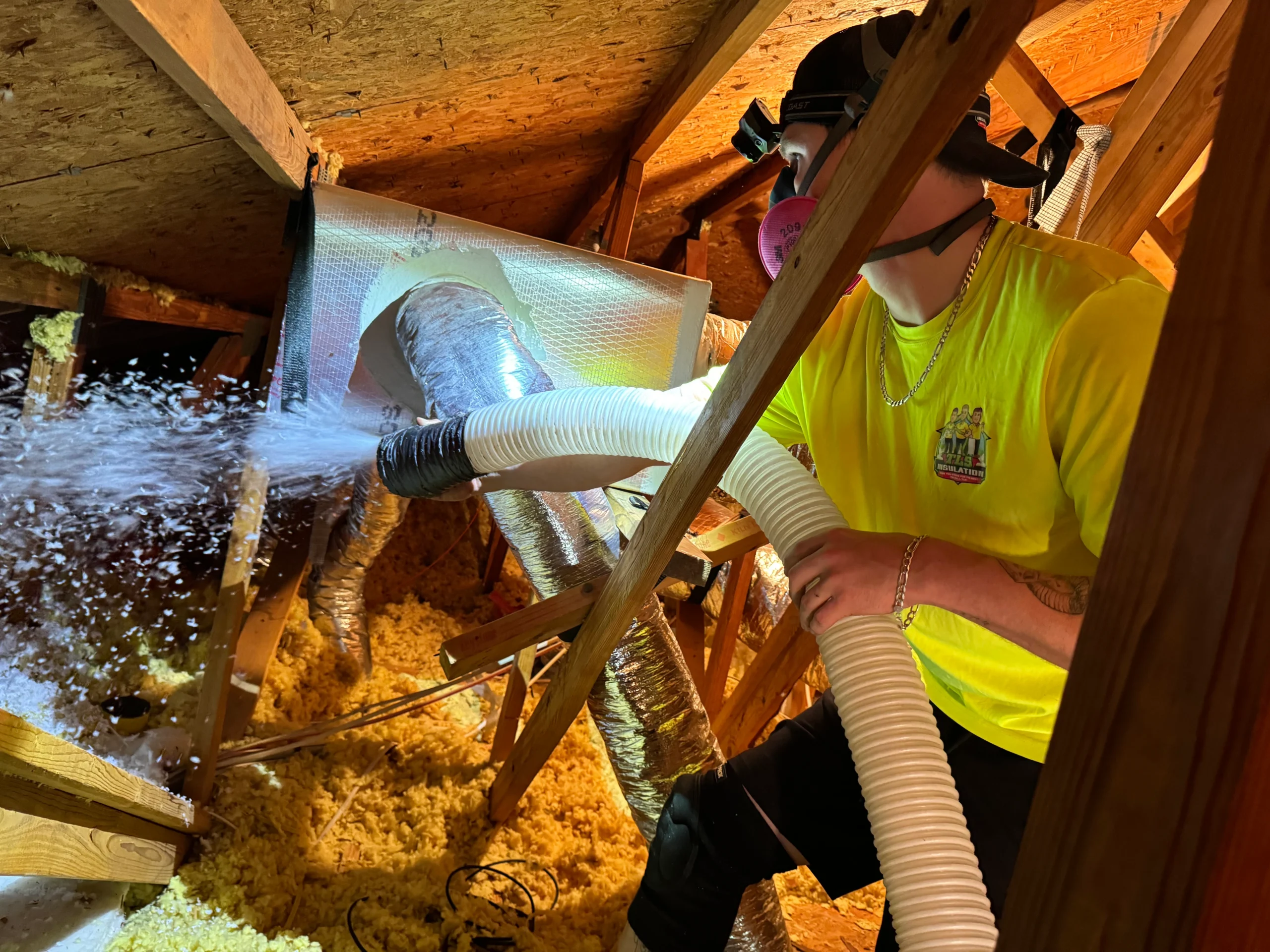
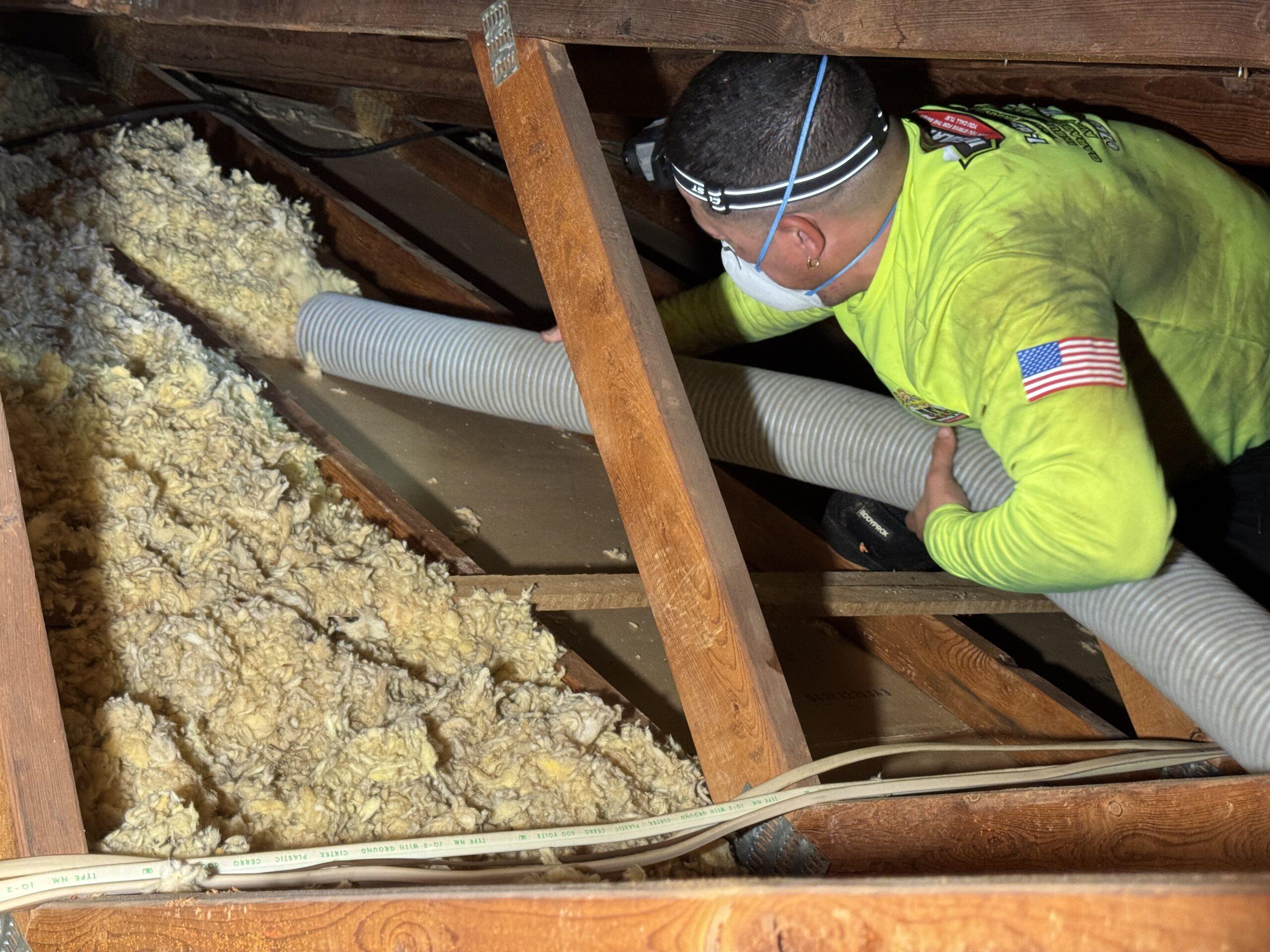
Every service performed by TLS’s in-house certified crew — no subcontractors. For Pinellas County coastal and barrier island properties, TLS uses only Johns Manville blown-in fiberglass, the only material we can warranty against salt-air degradation.


— Florida Building Code · Zone 2A
Pinellas County falls under IECC Climate Zone 2A — the hot-humid classification covering most of Florida outside its southernmost counties. The Florida Building Code (FBC) 7th Edition, Section R402.1.2 sets a minimum attic R-value of R-38 for all Zone 2A residential ceiling insulation.
For Clearwater Beach, Madeira Beach, and St. Pete Beach coastal homes where roof structure is tight, the FBC R806.5 unvented attic path allows closed-cell spray foam to the roof deck at R-20 as a code-compliant alternative.
TLS never installs below R-38 regardless of code exceptions — R-49 is our standard target for all Pinellas County installations, which also qualifies for the full Duke Energy rebate.
| Application | FBC Min | TLS Target |
|---|---|---|
| Vented attic (standard) | R-38 | R-49 |
| Unvented conditioned attic | R-20 cc foam | R-20+ |
| Exterior walls (2×4) | R-13 | R-13–20 |
| Floor over crawl/garage | R-13 | R-19+ |
| Pre-1985 Pinellas home | R-5–R-14 | R-49 retrofit |
TLS Energy Savers is a family-owned residential insulation company and one of the limited number of Duke Energy Florida pre-approved contractors serving Pinellas County. With 11+ years of industry experience and 50,000+ homes served, our team has been inspecting Pinellas County attics since before the 2024 hurricane season — and we’ve been assessing the post-storm damage firsthand.
What sets us apart in Pinellas County specifically: our Duke Energy certification means we can apply your rebate directly to your invoice. Other contractors who aren’t pre-approved cannot process this rebate for you. Every TLS Pinellas installation uses Johns Manville blown-in fiberglass — the only blown-in product warranted against settling and salt-air degradation in coastal Florida applications.
✔ Duke Energy Florida pre-approved contractor — limited network
✔ Johns Manville Lifetime Warranty — only material suited for coastal Pinellas
✔ No subcontractors — the team that quotes you performs the install
✔ BPI / NATE certified technicians — Duke’s required certification bodies
50,000+
home insulated
11 Years+
In Business
14
Pinellas Cities
From St. Petersburg’s pre-war bungalows to Clearwater’s waterfront and the barrier island homes of Madeira Beach and St. Pete Beach — TLS serves every major community in Pinellas County. The same Duke Energy rebate processing, Johns Manville material standard, and certified TLS crew applies regardless of address.
Largest city cluster — multiple distinct neighborhoods with varying housing ages. Old Northeast, Kenwood, Allendale Terrace pre-1950 stock; Pinellas Point and Lakewood 1960s–1970s. TLS's highest-volume Pinellas sub-region.
Major inland suburban cities — Largo (third-largest in the county), Pinellas Park, and the mid-county corridor. Heavy 1960s–1980s housing concentration, peak retrofit opportunity for Duke Energy rebate qualification.
County seat Clearwater plus the historic north Pinellas coast — Dunedin's 1950s–1970s stock, Tarpon Springs's sponge docks, and Palm Harbor's newer 1980s–2000s suburbs. Includes two barrier islands.
Madeira Beach and St. Pete Beach face the highest salt-air exposure in TLS's Pinellas service area — 3–4× higher concentration than inland Clearwater or St. Pete. Both communities were also in the post-Helene storm surge zone. For these homes, TLS uses only Johns Manville blown-in fiberglass — the only material that can be warranted against direct Gulf-front degradation mechanisms.
If your home is on a barrier island or within one block of the Gulf or Tampa Bay, TLS recommends inspection every 10–12 years regardless of visible signs.
Featured Pinellas Resource: Why St. Petersburg homes feel uncomfortable even with AC running — a detailed look at why 1970s St. Pete housing stock has the specific comfort complaints our customers describe, and exactly what to check first.
Not in Pinellas County? TLS also serves neighboring counties across Tampa Bay and Southwest Florida.
These verified reviews reflect what matters most to Pinellas County homeowners choosing an insulation company — dependable installers, clean workmanship, and Duke Energy rebates applied directly to the invoice.









Still have questions? Call us at (833) 857-7283 — we're happy to help.
Yes. Duke Energy Florida serves approximately 98% of Pinellas County residential customers and offers attic insulation rebates through the Home Energy Improvement (HEI) program. Current rates (as of May 7, 2025): $0.25 per square foot (up to $600) to bring insulation from R-19 or below to R-38+, and $0.27 per square foot (up to $700) to bring insulation from R-12 or below to R-38+. As a Duke Energy pre-approved contractor, TLS applies the rebate directly to your invoice — no forms for you to file.
Pinellas County is in IECC Climate Zone 2A. The Florida Building Code (Section R402.1.2) requires a minimum of R-38 for attic insulation. TLS recommends R-49 as the optimal target for maximum energy savings and full Duke Energy rebate qualification. Most Pinellas County homes built before 1985 are currently operating well below R-20 — meaning they're below even half the code minimum.
The Duke Energy Home Energy Check (HEC) is a free 20-question online questionnaire at duke-energy.com/FreeAudit that takes approximately 15 minutes. It is required before any Duke Energy rebate can be applied — you must complete the HEC before installation begins, and it remains valid for 24 months. TLS can guide you through the HEC over the phone before scheduling your inspection. Call (833) 857-7283.
The answer is almost always insulation performance. Homes built in the 1960s–1970s in St. Petersburg — the dominant era in the county's housing stock — were originally insulated to R-7 to R-11. After 45–55 years of Gulf Coast humidity and salt-air exposure, those batts are likely performing at R-4 to R-8. Your HVAC is working 3–4x harder than it should. A proper R-38 to R-49 upgrade combined with TLS's pre-insulation air sealing can transform comfort and reduce bills in a single day. See our detailed guide on why St. Petersburg homes feel uncomfortable even with AC running.
Pinellas County's peninsula geography exposes every property to salt-laden Gulf and Tampa Bay air through attic ventilation. Salt particles accelerate fiberglass loft loss, cause cellulose compaction, and degrade vapor barrier facings faster than inland installations. TLS uses only Johns Manville blown-in fiberglass for all Pinellas County installations — it's the only blown-in material that is inorganic, moisture-resistant, and backed by a Lifetime Warranty against the specific degradation mechanisms coastal Florida homes face.
Yes. Hurricane Helene (September 26, 2024) caused historic storm surge into Pinellas County's barrier islands and coastal zones, and Hurricane Milton (October 9, 2024) caused widespread wind and structural damage. Any Pinellas County home that experienced roof breach, flooding, or significant moisture infiltration should have its attic insulation assessed for moisture damage. Wet insulation permanently loses R-value and creates mold risk. TLS provides free post-storm moisture assessments for Pinellas County homeowners.
Attic insulation in Pinellas County typically costs $1,500–$3,500 for a standard single-family home, depending on attic size, existing insulation condition, and whether removal is needed. After the Duke Energy rebate ($0.25–$0.27/sqft, up to $600–$700) and the federal 25C tax credit (30% up to $1,200), most qualifying Pinellas homeowners see $750–$1,400 in total incentives, reducing net out-of-pocket cost substantially. See our Pinellas County cost guide.
Yes. TLS serves all 14 major Pinellas County communities: St. Petersburg, Clearwater, Largo, Pinellas Park, Safety Harbor, Seminole, Dunedin, Madeira Beach, Bay Pines, Palm Harbor, Tarpon Springs, East Lake, Oldsmar, and St. Pete Beach. For barrier island properties (Madeira Beach, St. Pete Beach), TLS takes salt-air exposure into account and uses only Johns Manville fiberglass blown-in rather than cellulose. Call (833) 857-7283 to schedule.
Blown-in fiberglass lasts 20–30 years in typical Pinellas County conditions with some performance reduction over time. In barrier island or coastal waterfront homes, effective service life may be 15–20 years due to accelerated salt-air degradation. Cellulose performs significantly shorter in coastal applications and is not recommended. Original fiberglass batts from the 1970s–1980s — still found in most Pinellas County homes — should be considered well past their effective service life. TLS recommends inspection every 10 years, or immediately if bills have been rising without HVAC explanation.
Still have a question we didn't answer?
📞 Call Us: (833) 857-7283GET A FREE COST ESTIMATION