

Pinellas County Top-Rated Insulation Contractor
Serving Punta Gorda, Port Charlotte, Rotonda West, Englewood, and every Charlotte County community — the only TLS county where 100% of homeowners are on FPL, meaning every qualifying home can access the same $220 ceiling insulation rebate.
Charlotte County is in IECC Climate Zone 1A (R-30 minimum, R-38 for FPL rebate, R-49 TLS optimal) with a median build year of 1986 and the most direct hurricane hit record of any TLS county — Charley (2004) and Ian (2022). Many homes are now on their second insulation lifecycle and don’t know it.
GET A FREE COST ESTIMATION
Charlotte County sits in IECC Climate Zone 1A — the hottest classification in the continental United States. Combined with a median build year of 1986, the typical Charlotte County home was built when codes accepted R-11 as compliant. That insulation has now been through nearly 40 years of Florida heat and humidity cycling.
The Florida Building Code minimum for Zone 1A is R-30 — but that's the legal floor, not the performance target. The FPL $220 rebate threshold is R-38, and TLS recommends R-49 as the optimal target. The incremental cost from R-38 to R-49 is typically only $150–$300 in additional material — and in Charlotte County's 9-month cooling season (March–November), that small material delta delivers years of compounding savings.

In Charlotte County, the typical home was built in 1986 with R-11 attic insulation. Forty years and two hurricanes later, that original installation is rarely performing above R-7 to R-9. When we measure attics here, the gap between what's there and what FPL will reimburse you to install isn't a small upgrade — it's a complete rebuild of the home's thermal envelope.
— Seth Hoerig, Owner · TLS Energy SaversCharlotte County is the only TLS county where every single home is on FPL. There's no LCEC split like Lee County. No PREC split like Manatee County. 100% of Charlotte County is FPL territory, which means every qualifying homeowner has the same simple path to the same flat $220 ceiling insulation rebate.
TLS is a certified FPL Participating Independent Contractor (PIC). The rebate is confirmed during your free inspection — your current attic R-value must be R-8 or below to qualify. The $220 is then deducted directly from your invoice on installation day. No forms to file. No reimbursement waiting. No paperwork on your end.
Charlotte County is the only county TLS serves that has been directly struck by two major hurricanes within 20 years. Many homes are now on their second or third insulation replacement cycle — and many homeowners don't know which cycle their home is currently in.
Made direct landfall AT Punta Gorda as a Category 4 hurricane — the strongest US hurricane since 1992. An estimated 25,000+ Charlotte County homes sustained significant damage. The vast majority of post-Charley insulation replacements were installed 2004–2007. Those replacements are now 18–22 years old — past or approaching the practical lifespan of most blown-in products. Homes that replaced insulation post-Charley may now be back below R-8 and qualify for the FPL rebate again.
Brought Category 4 winds across all of Charlotte County. Port Charlotte, Punta Gorda, and Rotonda West experienced significant wind damage. Coastal communities — Englewood, Cape Haze, Placida — experienced storm surge. Homes that replaced roofs after Ian may retain moisture-damaged attic insulation underneath. Some homes that already replaced insulation post-Charley experienced a second moisture event in 2022 — that's two compounding lifecycle events on the same roof.
| Event | Year | Impact | 2026 Status |
|---|---|---|---|
| Hurricane Charley | 2004 | Direct hit at Punta Gorda · 25,000+ homes damaged | Post-Charley insulation now 18–22 years old |
| Insulation replacements | 2004–2007 | First post-hurricane cycle | Many at or past practical lifecycle |
| Hurricane Ian | 2022 | Cat 4 conditions county-wide · coastal surge | Some post-Ian moisture damage unremediated |
| Current | 2026 | Many homes have degraded or unassessed insulation | Free moisture assessment available |
If your home was affected by either Charley or Ian — even if the roof was repaired at the time — TLS provides a free moisture meter assessment. We measure water content at multiple attic points, identify compression and contamination, and confirm whether replacement is needed. See our storm-damaged insulation guide.
Punta Gorda Isles is Charlotte County's signature canal waterfront community — CBS (concrete block) homes built primarily in the 1970s–1990s along more than 70 miles of navigable canals. The waterfront location and CBS construction create specific insulation considerations that TLS specifies differently than for inland Charlotte homes.
The fundamentals: blown-in fiberglass for the attic floor as standard (moisture-resistant, Lifetime Warranty backed), with closed-cell spray foam evaluated — not assumed — for homes in FEMA flood zones where roof-deck moisture migration is a structural concern. CBS wall cavity foam injection is the secondary upgrade for whole-home efficiency improvement, particularly relevant given the waterfront environment.
Post-Ian note for PGI homeowners: Punta Gorda Isles experienced wind damage in Ian (2022). Some homes that replaced roofs in 2022–2023 may retain moisture-damaged attic insulation underneath the new roof — a free TLS assessment confirms whether replacement is needed.
Moisture-resistant Johns Manville fiberglass at R-38 to R-49 — TLS's standard PGI specification. Cellulose is not recommended for coastal Charlotte communities due to humidity exposure.
For PGI homes in FEMA flood zones where roof-deck moisture migration is a structural concern, closed-cell spray foam is evaluated — not assumed. TLS recommends only when conditions warrant.
For whole-home efficiency, foam injection into CBS block cores provides both thermal and vapor barrier benefits — particularly relevant for waterfront homes with prolonged humidity exposure.
Rotonda West is the second-largest population concentration in Charlotte County after Port Charlotte — and competitors ignore it almost entirely. The community's distinctive circular street pattern and 55+ demographic profile create a focused insulation conversation that TLS handles differently than the volume Port Charlotte market.
Most Rotonda West homes were built between 1970 and 1985 — meaning the typical home is now 40–55 years old, was built to R-11 attic standards, and was directly in Hurricane Charley's path in 2004. Many homes have been through one insulation replacement cycle already; some haven't been touched since original construction.
The 55+ comfort argument: for Rotonda West's many fixed-income retiree households, the math on insulation isn't abstract. A Rotonda West home with R-9 attic performance pulls noticeably more cooling load than the same floorplan at R-49 — and the difference shows up on the FPL bill every month, all year. For snowbird homes that sit closed up June through October, an insufficient envelope causes inefficient AC cycling exactly when bills are highest.
What We Do
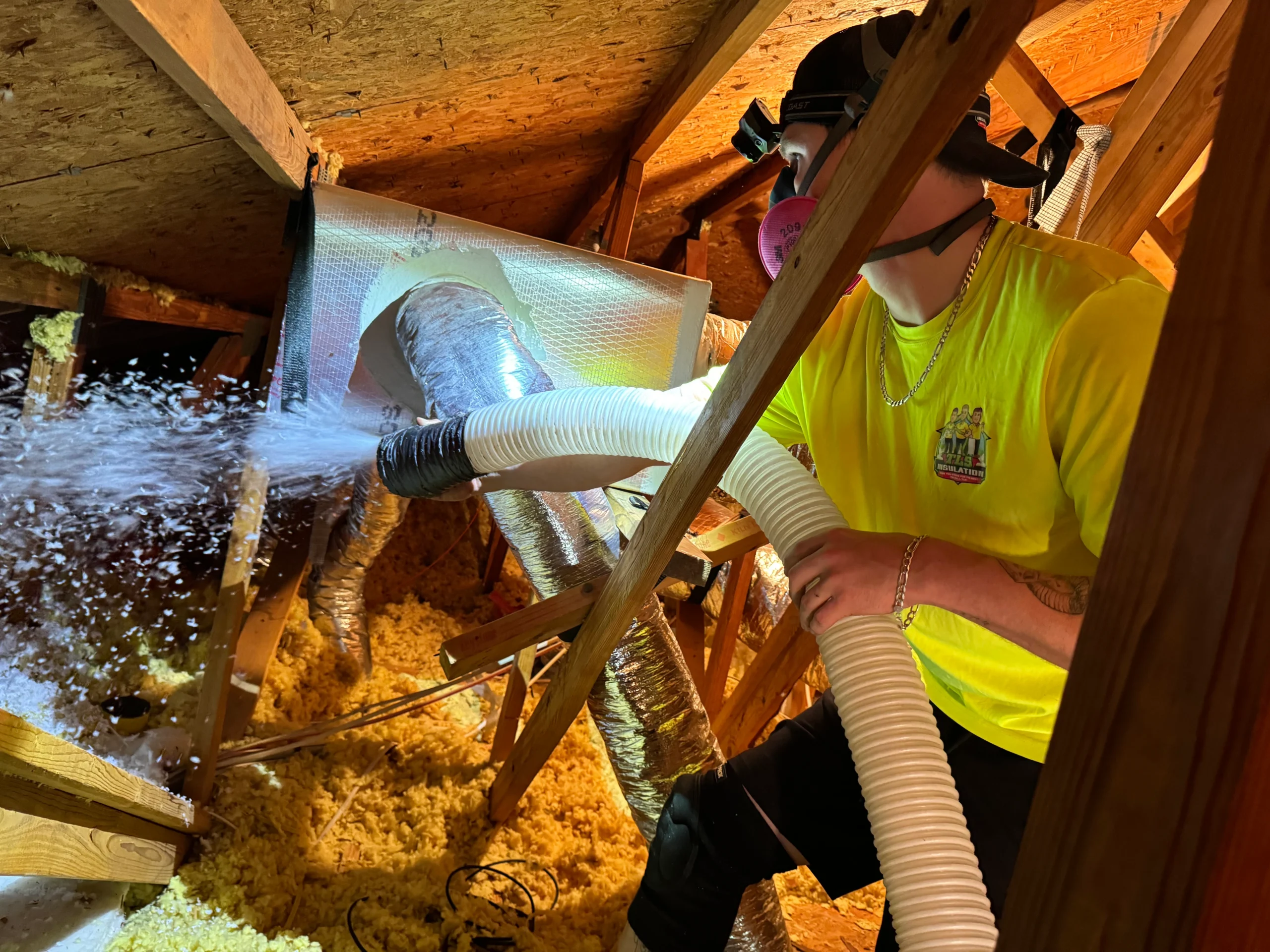
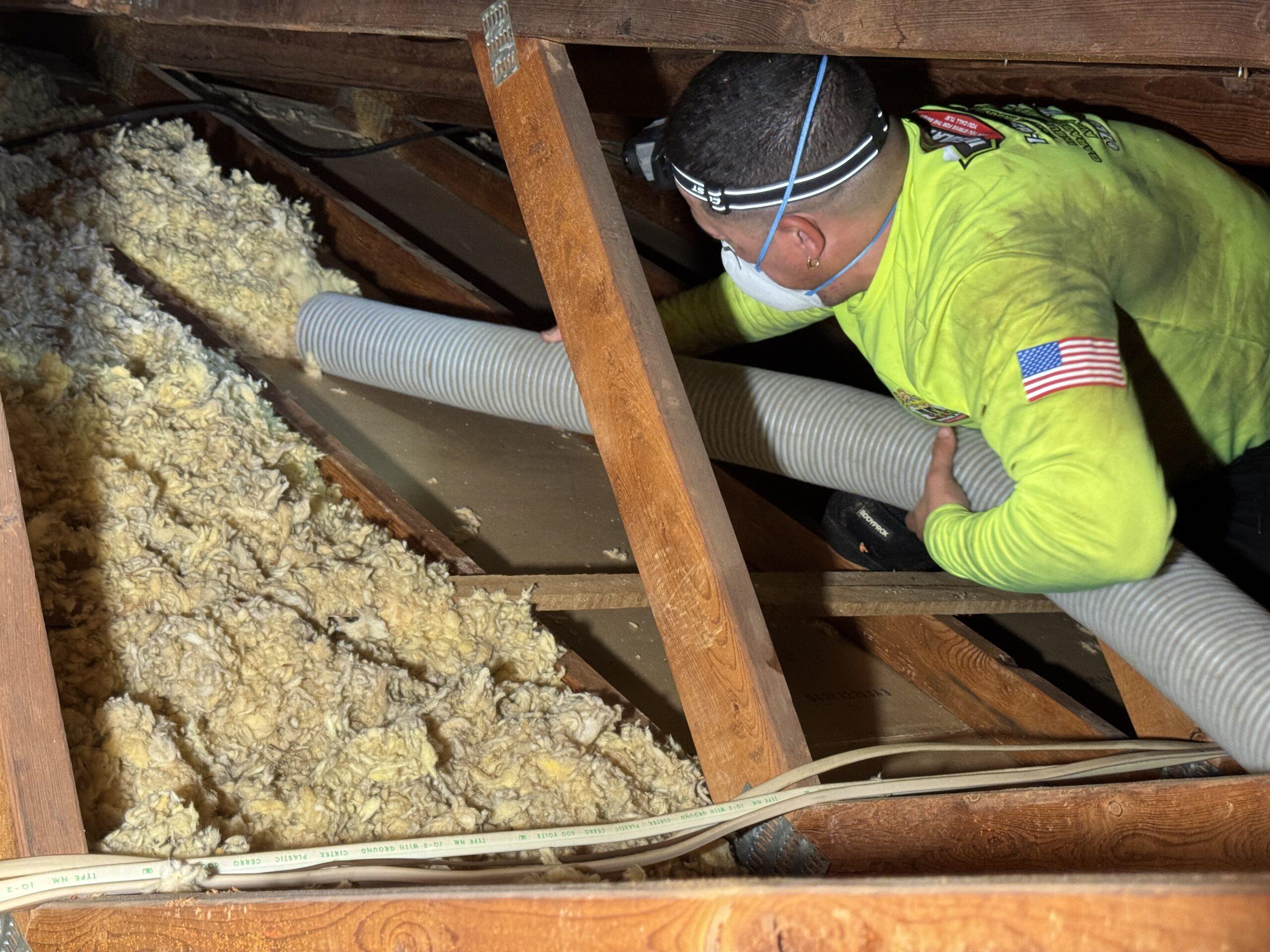
Every service performed by TLS’s in-house, certified team — no subcontractors. Charlotte County’s combination of Zone 1A heat, dual hurricane history, and CBS construction stock requires specific service approaches we’ve refined over 11+ years in this market.


Pricing varies primarily by attic size, current insulation condition, and whether removal is required. Below are current Charlotte County rate ranges as of April 2026.
For a typical 1,500 sqft Port Charlotte attic upgrade from R-11 to R-49: ~$2,000 gross, dropping to ~$1,780 net after the FPL $220 rebate. Storm-damaged removal scenarios shift pricing higher; clean install scenarios stay at the lower end of each range.
| Service | Per Sq Ft | 1,500 sqft |
|---|---|---|
| Blown-in fiberglass install (JM) | $1.00–$2.20 | $1,500–$3,300 |
| Removal — clean | $1.00–$1.50 | $1,500–$2,250 |
| Removal — contaminated / storm | $1.50–$3.00 | $2,250–$4,500 |
| Removal — mold | $2.00–$3.50 | $3,000–$5,250 |
| FPL rebate ($220 flat) | — | – $220 |
TLS Energy Savers is a family-owned residential insulation company and a certified FPL Participating Independent Contractor serving 100% of Charlotte County. With 11+ years across the area and 50,000+ homes served, our team has been in Charlotte County attics through both major hurricane recovery cycles — Charley aftermath in 2004–2007 and Ian aftermath since 2022.
What sets us apart in Charlotte County specifically: deep familiarity with Punta Gorda Isles canal home specifications, accurate Zone 1A technical guidance (R-30 vs R-38 vs R-49), Rotonda West 55+ community attention, and a no-paperwork FPL rebate process that puts the $220 directly on your invoice. No subcontractors. No surprises.
✔ FPL Participating Independent Contractor — Charlotte’s only utility
✔ Zone 1A specialists — accurate R-30 vs R-38 vs R-49 guidance
✔ Free Charley/Ian moisture meter assessment for affected homes
✔ Punta Gorda Isles CBS canal home specification expertise
✔ Johns Manville Lifetime Warranty — backed against settling for life
50,000+
home insulated
11 Years+
In Business
13
Charlotte Communities
From Punta Gorda's historic downtown and the canal-front planned community of Punta Gorda Isles, to Port Charlotte's vast subdivision network, the 55+ master-planned community of Rotonda West, and the rural inland communities of Cleveland, Gardner, Hopewell, and Lake Suzy — TLS serves every Charlotte County address with the same FPL rebate process and certified crew.
Charlotte County's three largest communities — Port Charlotte (the largest unincorporated CDP), Punta Gorda (the only incorporated city & county seat, hit directly by Charley + Ian), and Rotonda West (the 55+ master-planned community with distinctive circular streets).
Coastal Charlotte communities with Gulf access and post-Ian surge exposure. Higher humidity profile means TLS specifies fiberglass exclusively — cellulose is not recommended for these waterfront homes.
Smaller inland Charlotte County communities — wide mix of housing eras, all sharing the same Zone 1A heat profile and 100% FPL coverage. The same $220 rebate process applies regardless of community size.
TLS also serves neighboring counties across Southwest Florida.
These verified reviews reflect what matters most to homeowners choosing an insulation company. Our dependable installers, clean workmanship, responsive support, honest pricing, and finished results has earned a stellar reputation across Southwest Florida.









Quick answers to the most common Charlotte County insulation, R-value, and FPL rebate questions.
Charlotte County is in IECC Climate Zone 1A. The Florida Building Code minimum is R-30 — but the FPL $220 rebate threshold is R-38, and TLS recommends R-49 as the optimal target. The incremental cost from R-38 to R-49 is typically only $150–$300 in additional material — and in Charlotte County's 9-month cooling season, that small material delta delivers years of compounding savings. Most homes built before 2000 currently operate at R-7 to R-13.
Charlotte County is in IECC Climate Zone 1A — the hottest climate zone in the continental United States. This is the same as neighboring Lee County, but distinct from Hillsborough, Pinellas, Sarasota, and Manatee, which are all Zone 2A. Zone 1A's R-30 code minimum is lower than Zone 2A's R-38 — but TLS recommends R-38 minimum (FPL rebate threshold) and R-49 optimal regardless of which zone you're in.
Yes. 100% of Charlotte County is served by Florida Power & Light. There's no LCEC split like Lee County. No PREC split like Manatee County. Every Charlotte County homeowner is potentially eligible for the FPL $220 ceiling insulation rebate through TLS's certified contractor (PIC) status.
Yes. Charlotte County experienced Hurricane Charley (August 2004 — direct hit at Punta Gorda) and Hurricane Ian (September 2022 — Cat 4 conditions county-wide). Homes that replaced roofs after either storm may retain moisture-damaged attic insulation underneath. TLS provides free moisture meter assessments for any Charlotte County home affected by either hurricane — we measure water content at multiple attic points and identify compression and contamination.
For PGI's CBS (concrete block stucco) canal homes, TLS specifies blown-in fiberglass for the attic floor as standard — moisture-resistant and Lifetime Warranty backed. Closed-cell spray foam may be evaluated (not assumed) for homes in FEMA flood zones where roof-deck moisture migration is a structural concern. CBS wall cavity foam injection is the secondary upgrade option for whole-home efficiency improvement. Cellulose is not recommended for any coastal Charlotte community due to humidity exposure.
For a typical 1,500 sqft Port Charlotte attic upgraded from R-11 to R-49: gross project cost is approximately $2,000. After the FPL $220 rebate (applied directly to invoice), net homeowner cost is approximately $1,780. Estimated monthly cooling savings: ~$45/month. Payback period: ~40 months.
Yes. TLS serves all 13 Charlotte County communities: Punta Gorda, Punta Gorda Isles, Port Charlotte, Rotonda West (55+ planned community), Englewood (Charlotte portion), Placida, Cape Haze, Murdock, El Jobean, Harbour Heights, Cleveland, Gardner, Hopewell, and Lake Suzy. The same FPL $220 rebate process and certified crew apply regardless of which community you're in.
GET A FREE COST ESTIMATION