

Rodents got into a small St. Petersburg attic and chewed through several supply lines. The homeowner wanted the whole duct system replaced as soon as possible. Four of the nine runs disappear under a flat roof, so the job came down to replacing every foot we could reach and joining cleanly to the part we could not.
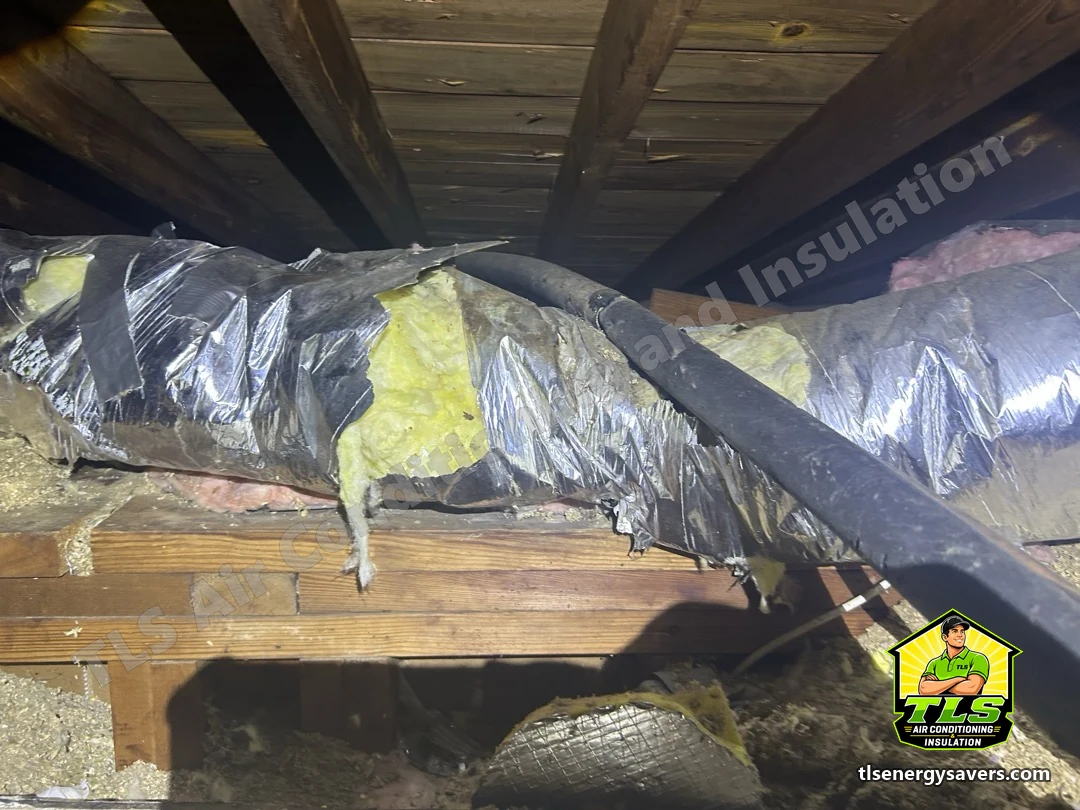
The homeowner had rodents in the attic, and photos from up there already showed several duct lines chewed and torn. The ask was simple: replace the full duct system, and soon.
A chewed supply line is not a small leak. Every hole in a supply duct blows cooled air into the attic instead of into the room it was meant for, so the rooms on the end of those lines run warm while the air conditioner keeps running to catch up. In a Pinellas County summer that adds up fast.
The work also qualified for Duke Energy’s duct repair rebate, which the homeowner used toward the job.
The attic is small. It has about three to four feet of headroom at the peak, and the roof is a triangle, so the space drops to under two feet toward the edges. Everything in it is done on hands and knees.
The system itself is simple: nine supply runs, all standard sizes, fed from two duct-board distribution boxes. Several runs had their outer jackets split or torn open, with the insulation hanging out. A rodent trap was still set beside one of the runs.
The hard part was where four of the nine runs go. They leave the distribution boxes and travel about 20 feet into the flat-roof section of the house, where the kitchen meets the laundry room and between the kitchen and the master bedroom. Under a flat roof there is no attic to crawl into.
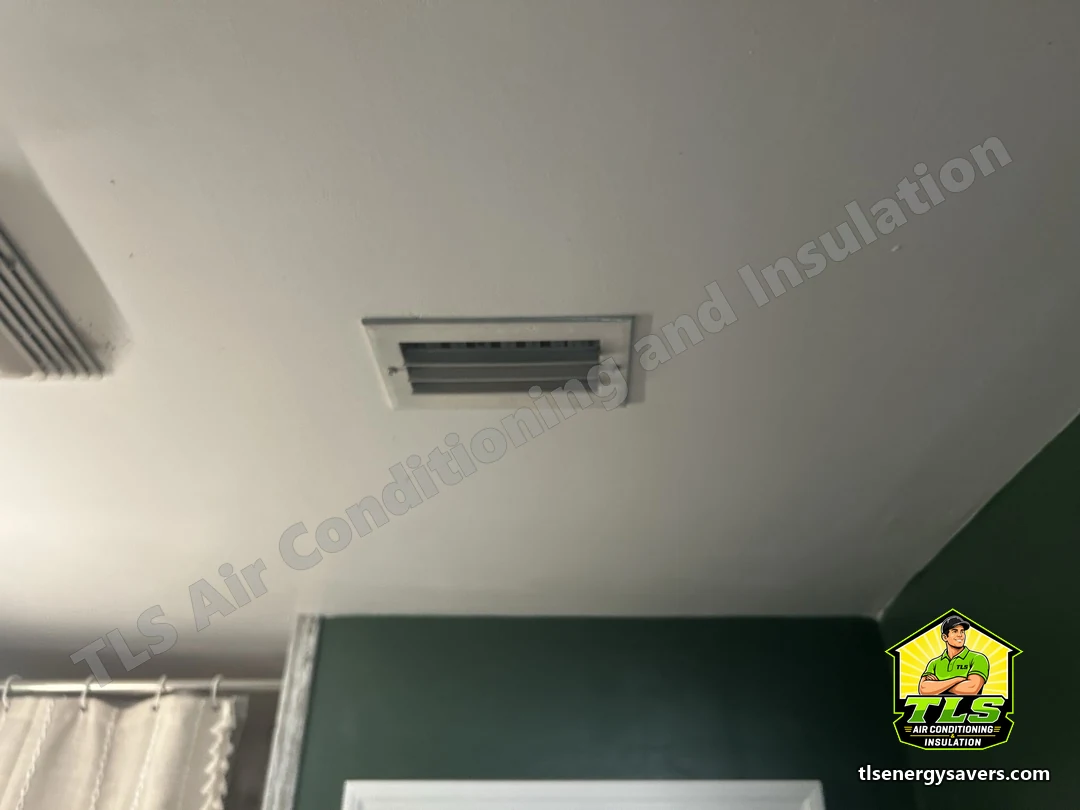
There is an access panel in the master bathroom ceiling, and the homeowner believed it opened onto another distribution box where three or four of those lines meet. Getting in means cutting the foam seal and removing the panel, and nobody can promise the space behind it is workable until it is open.
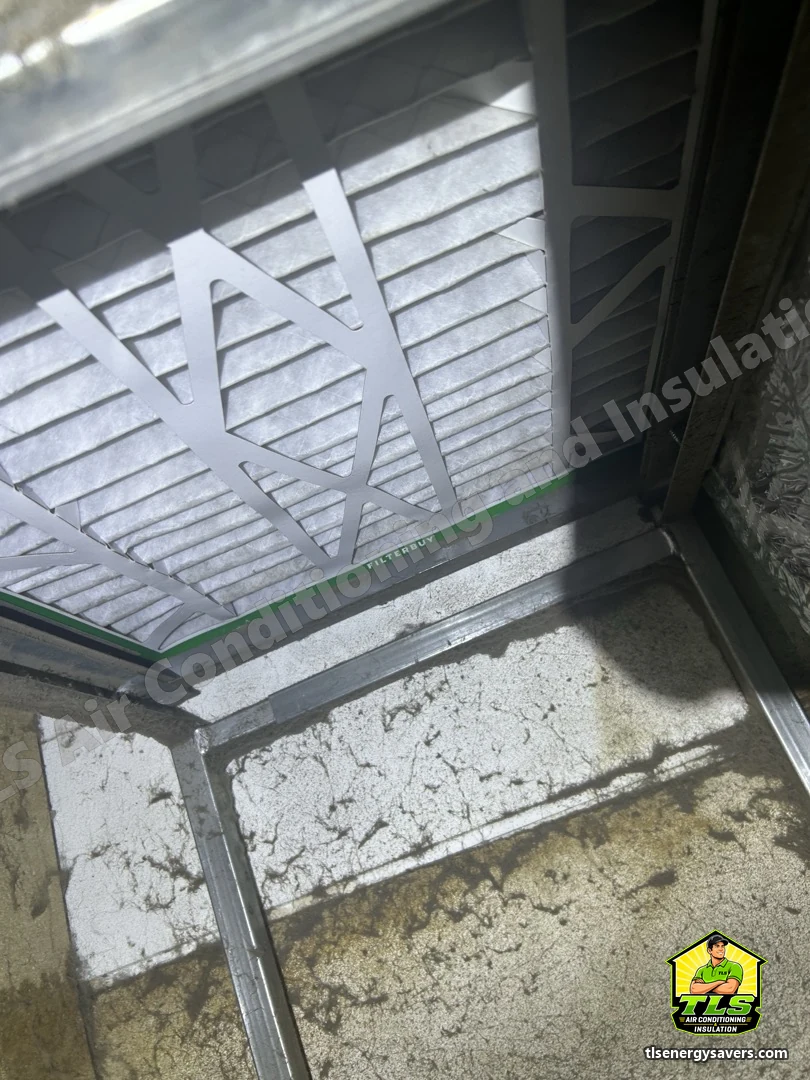
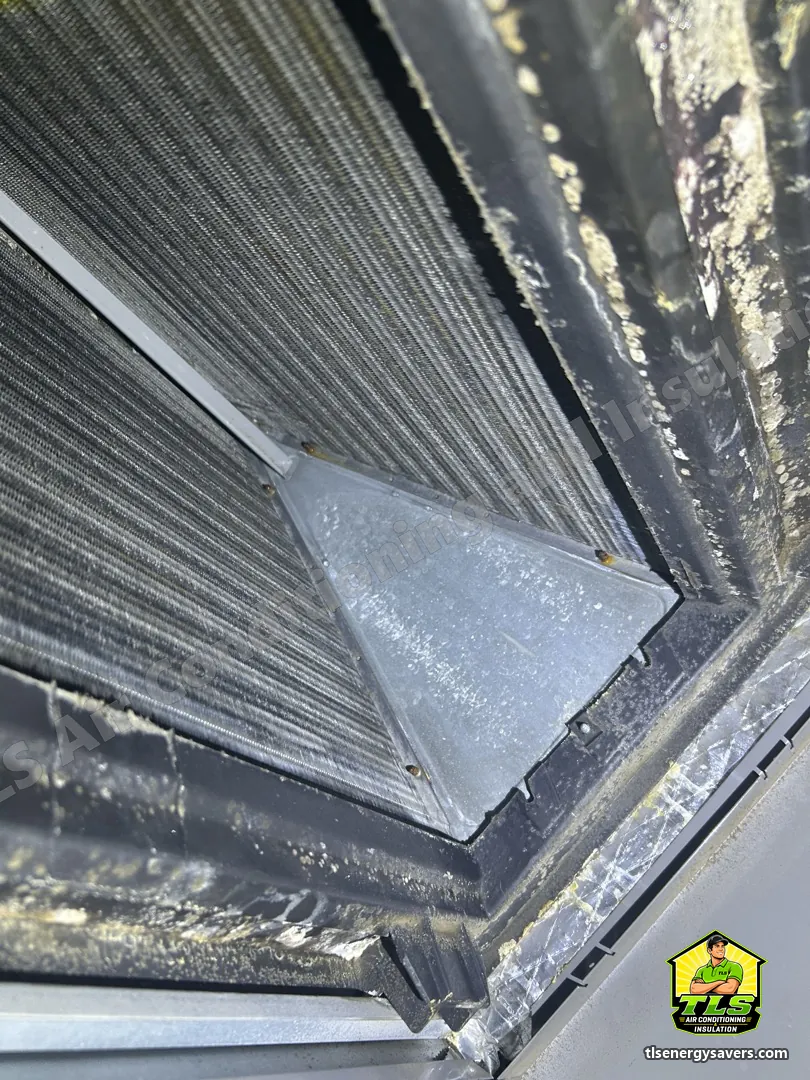
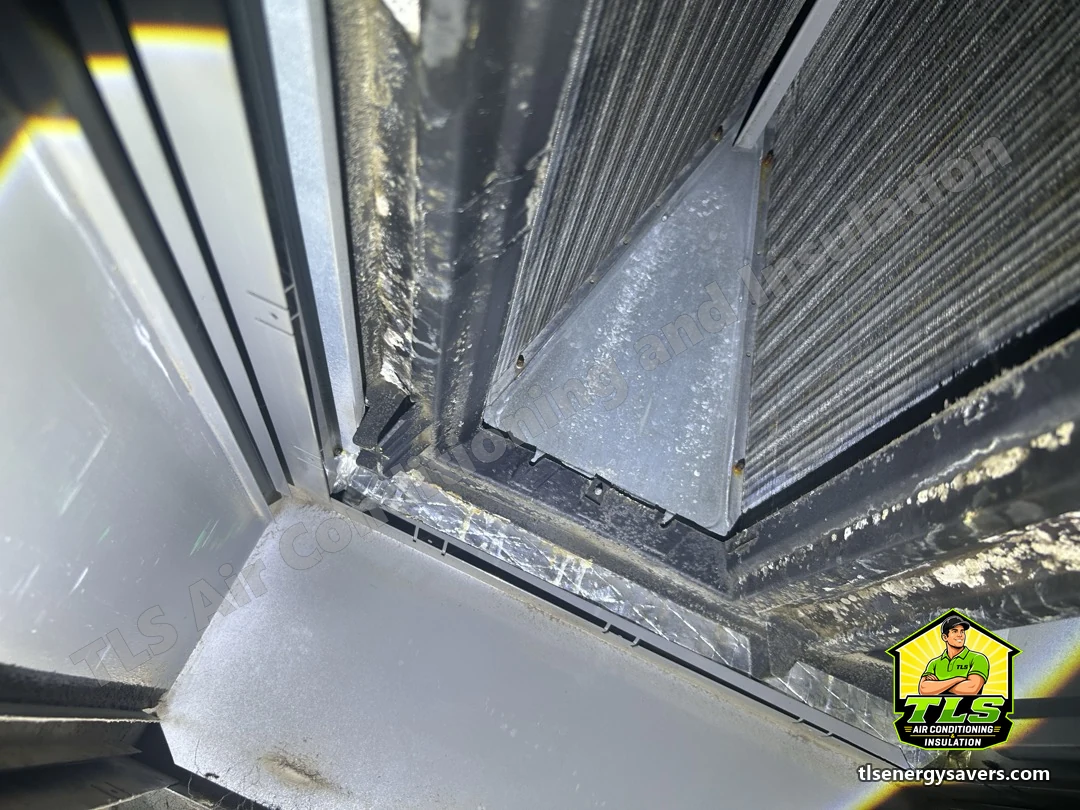
The air handler sits in a hallway closet behind a double louvered door, with the return at the closet. Our tech checked the coil on the same visit. There was growth along the bottom near the drain pan, but the coil face itself was fairly clean, mostly because the homeowner runs a 5-inch, two-ply media filter.
The flat-roof runs are where an honest estimate matters. A 40-foot run that disappears under a flat roof cannot be pulled out and replaced from end to end without opening ceilings. So the plan was spelled out before any work started: on those runs, we replace roughly the 20 feet we can reach, join it with a collar at the edge of the flat roof, and leave the buried section in place.
That was said to the homeowner up front, along with the fact that the bathroom panel might only make about half of those runs reachable. It is better to know that on the estimate than to find out on install day.
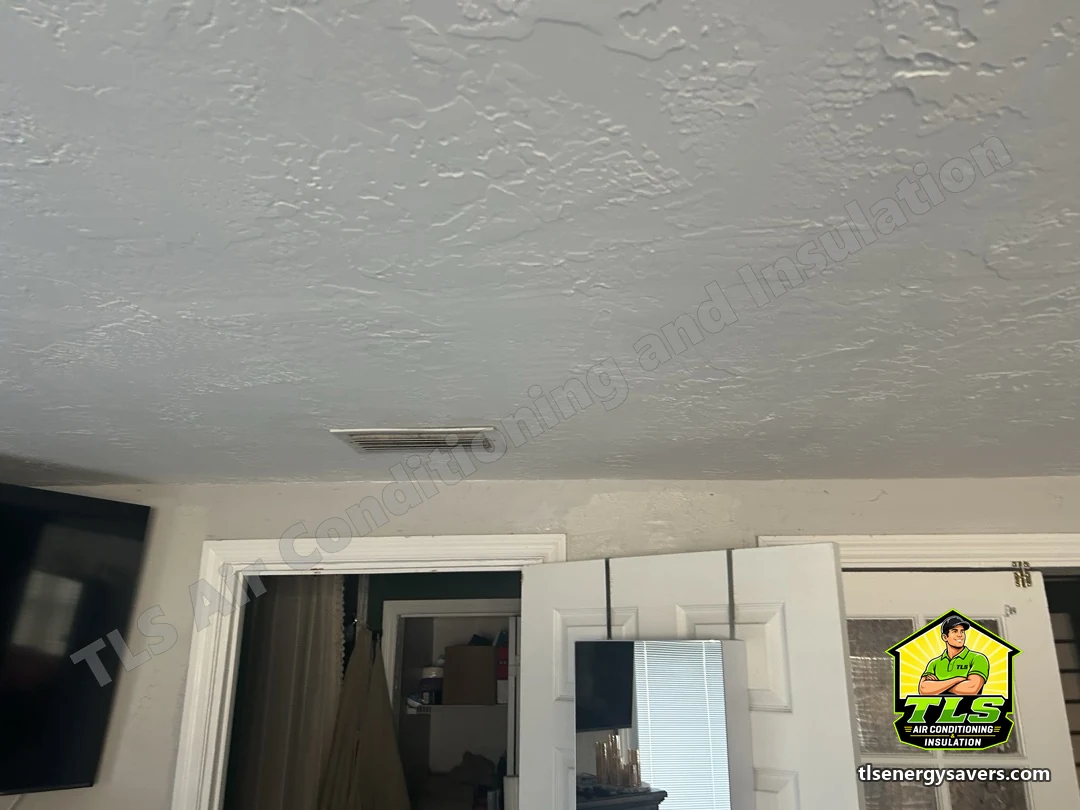
Twenty-one photos from the inspection visit in October 2026. They show the old duct system as we found it, before the replacement. Click any photo to open it full size. Homeowner details have been removed; the city and ZIP have not.
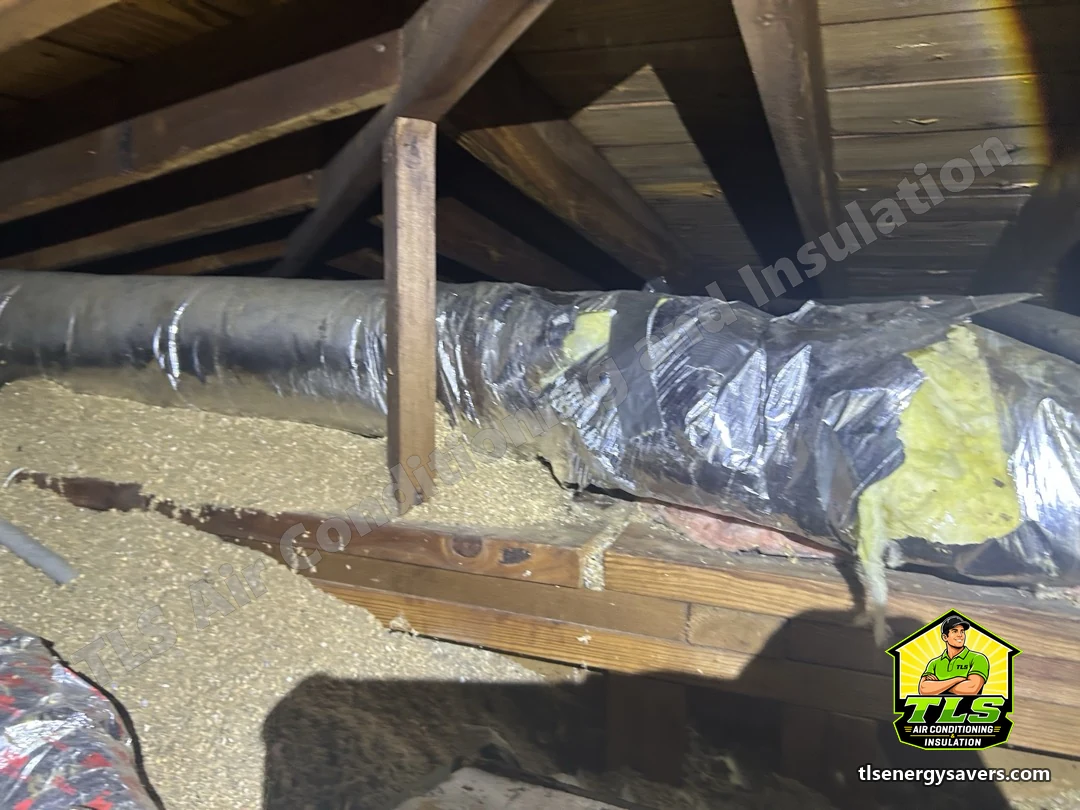
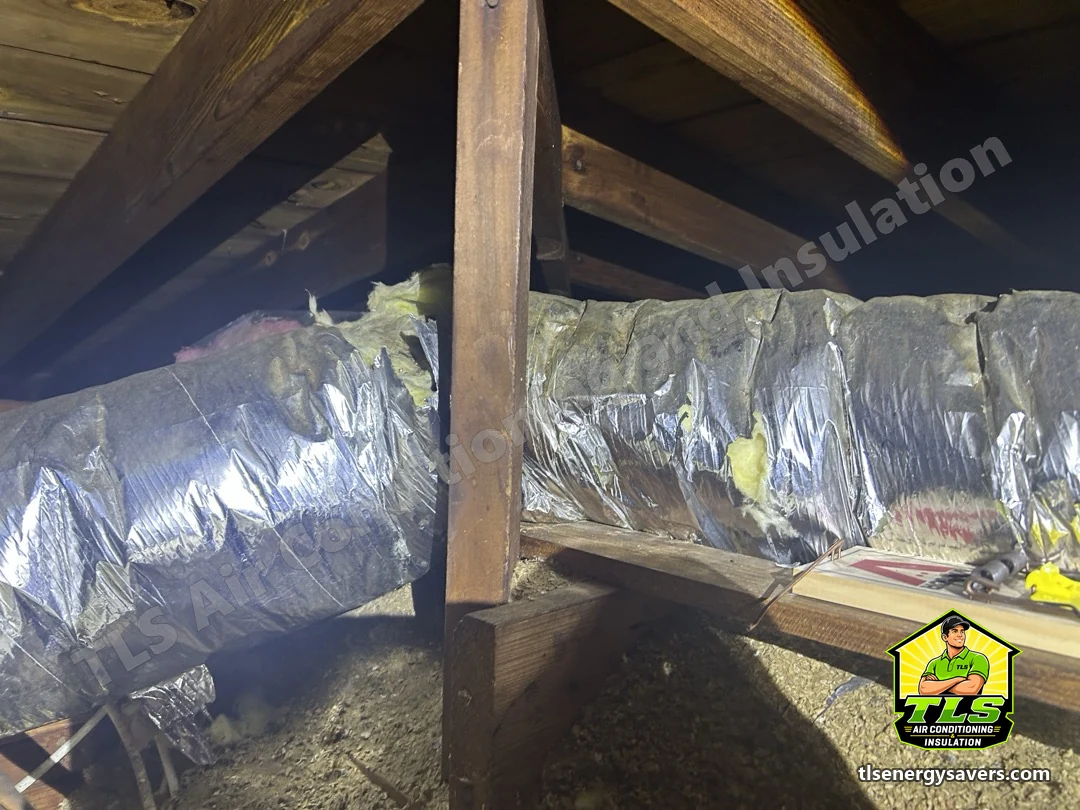
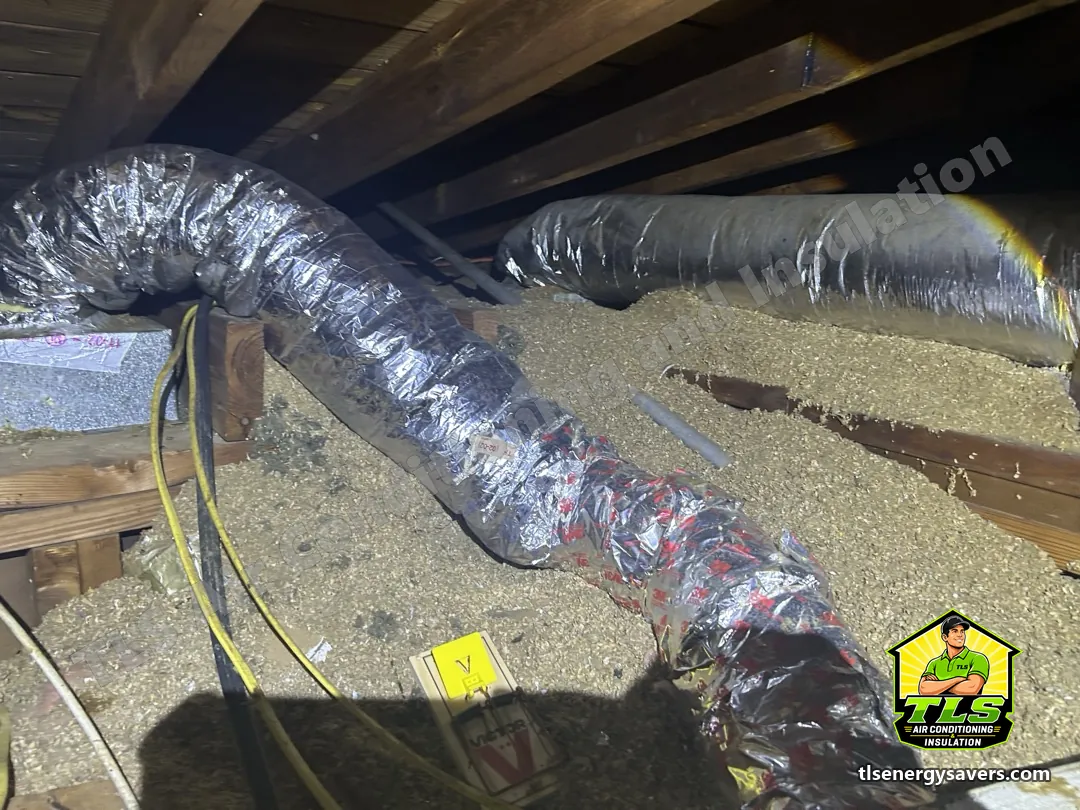
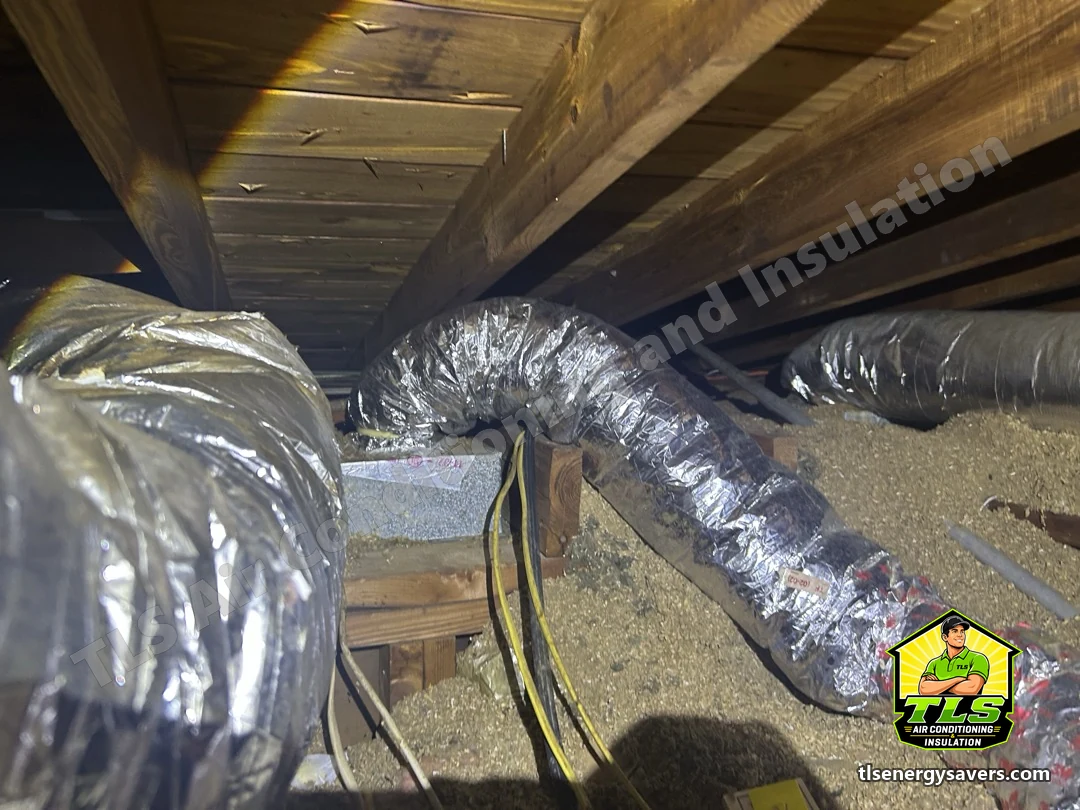
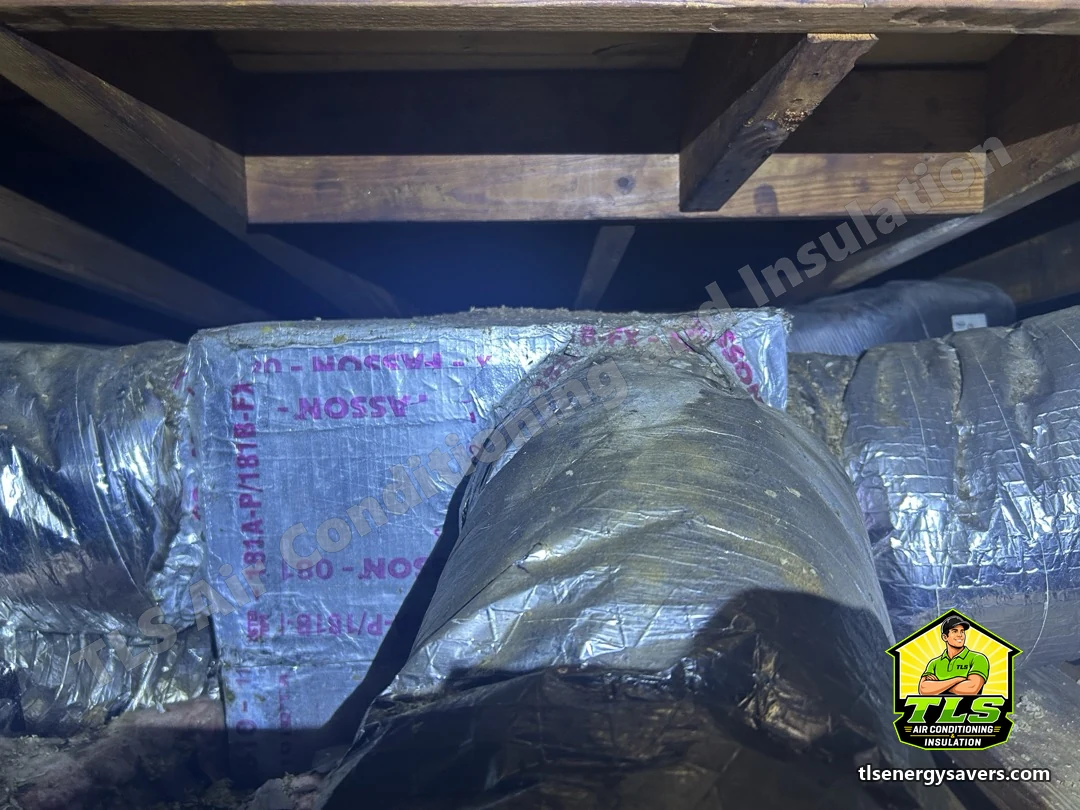
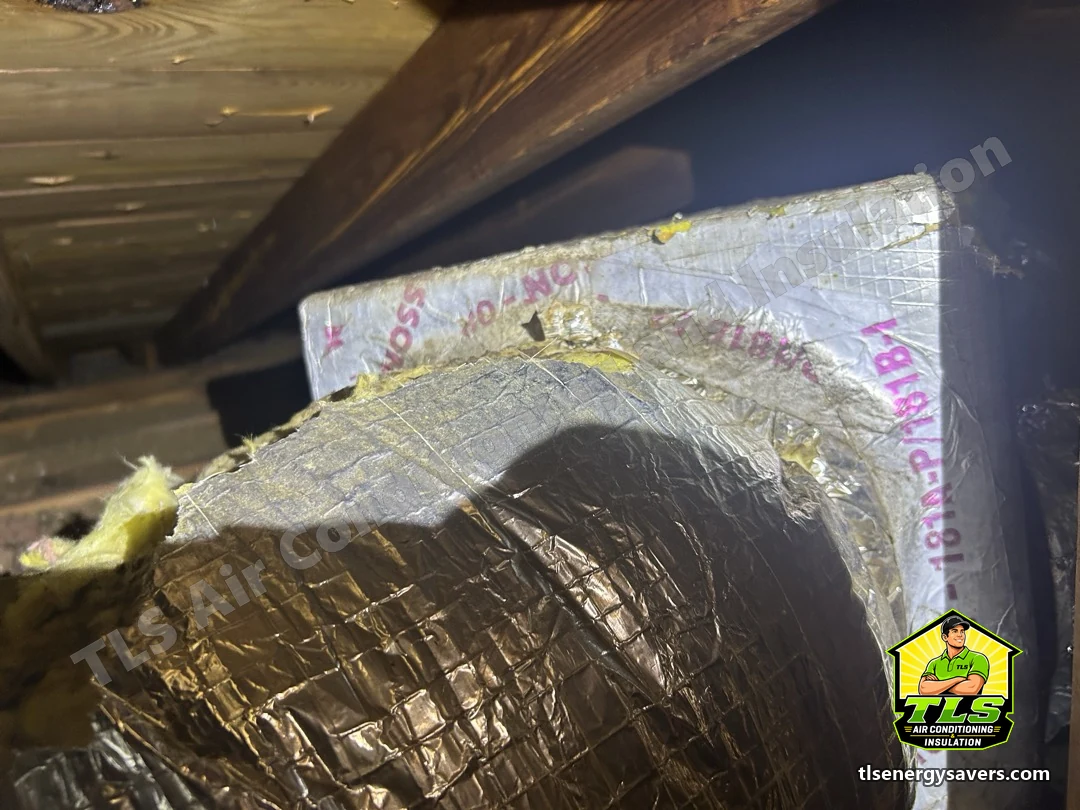
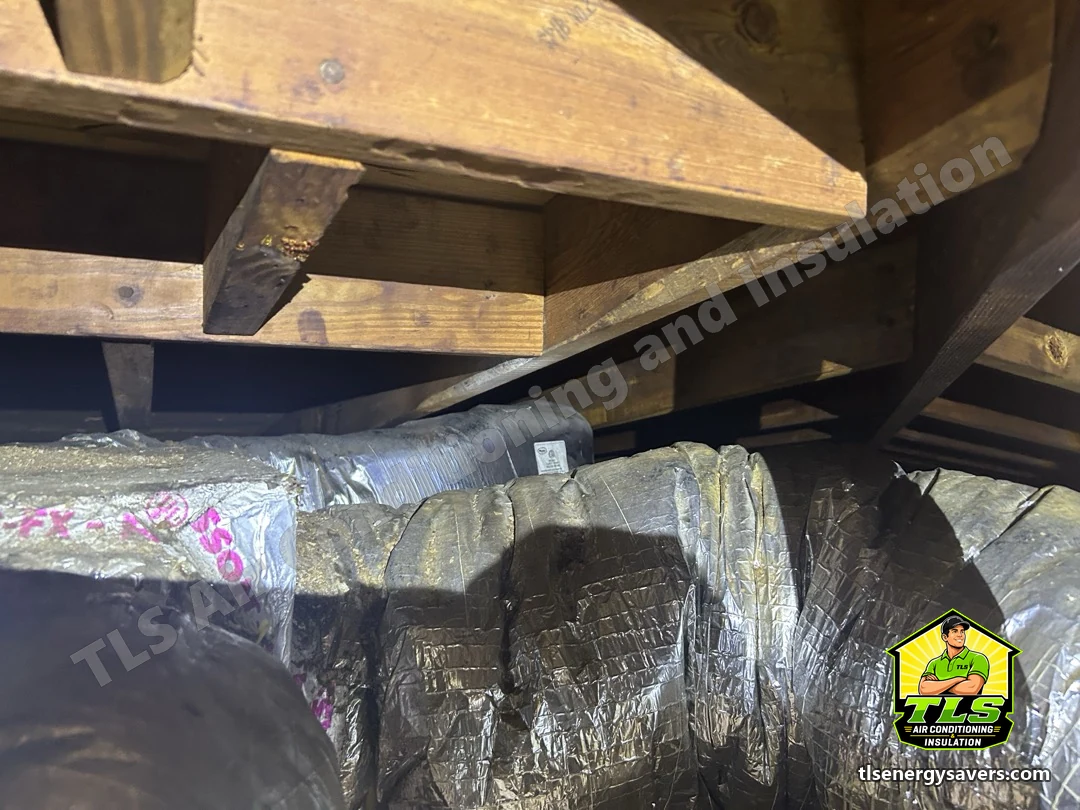
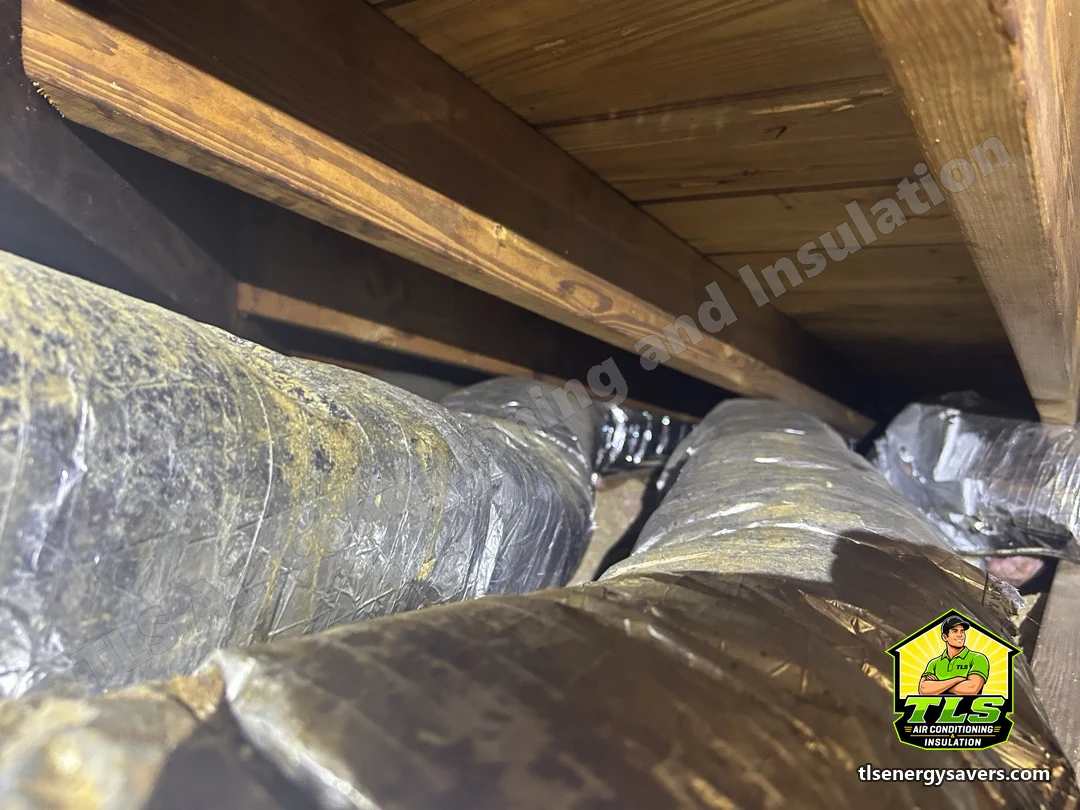
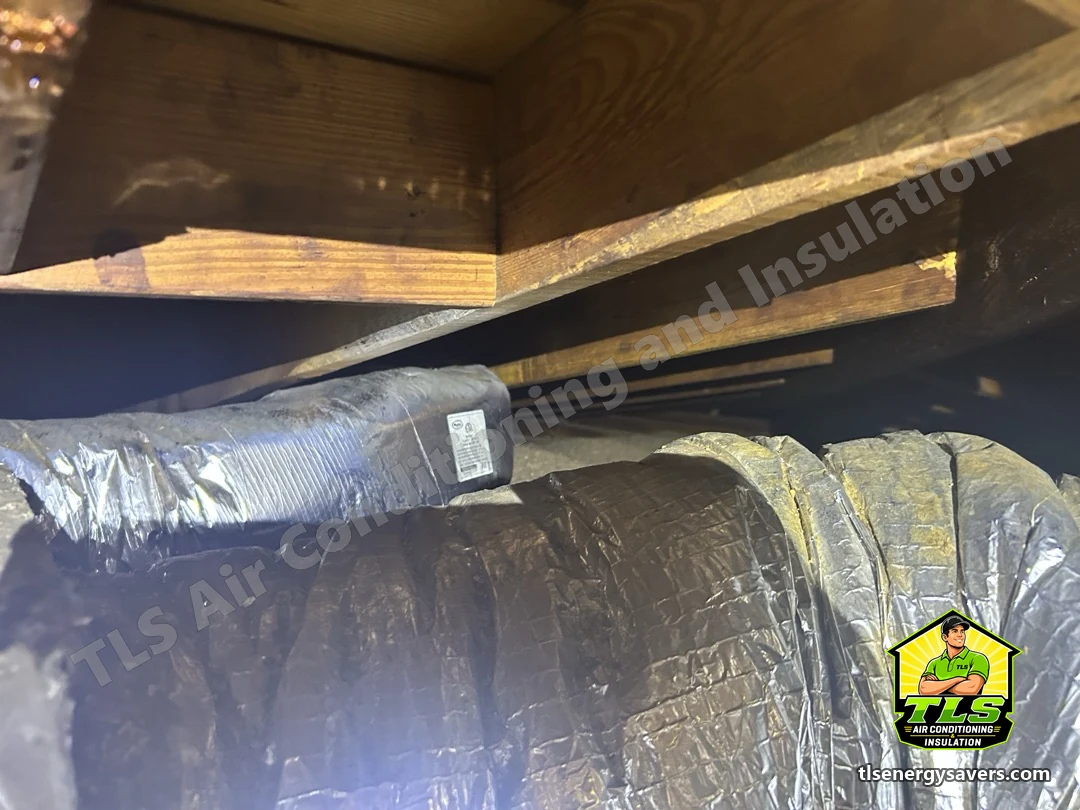
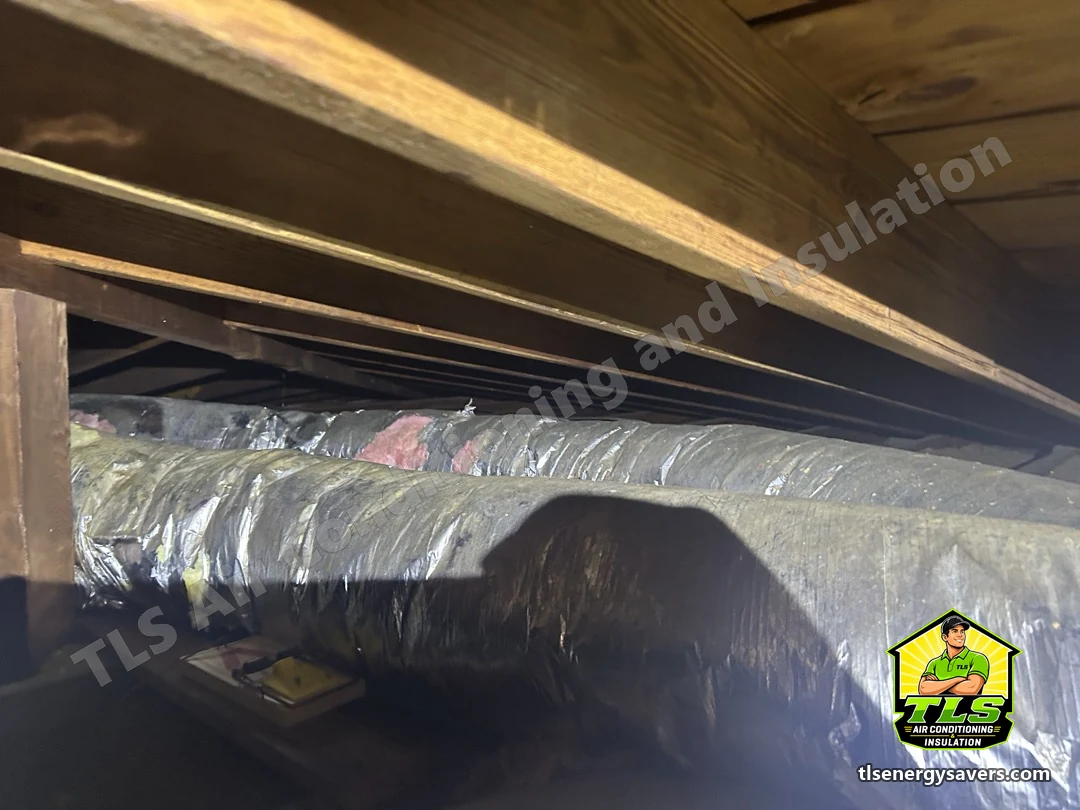
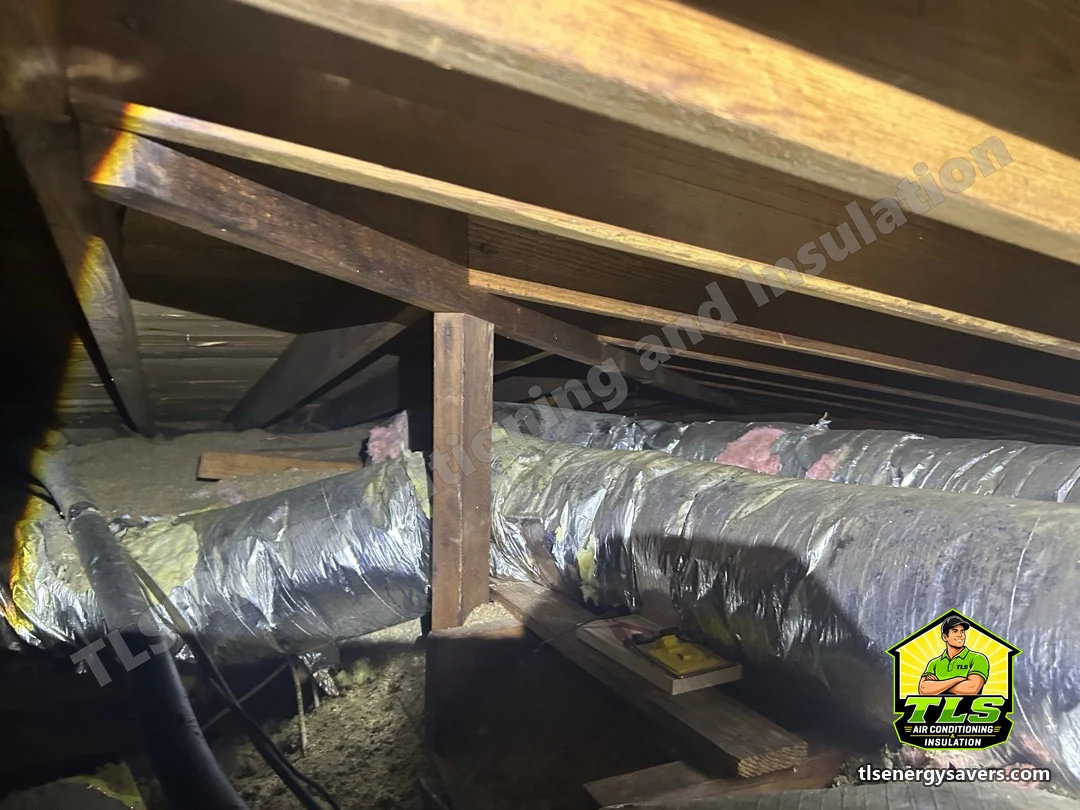
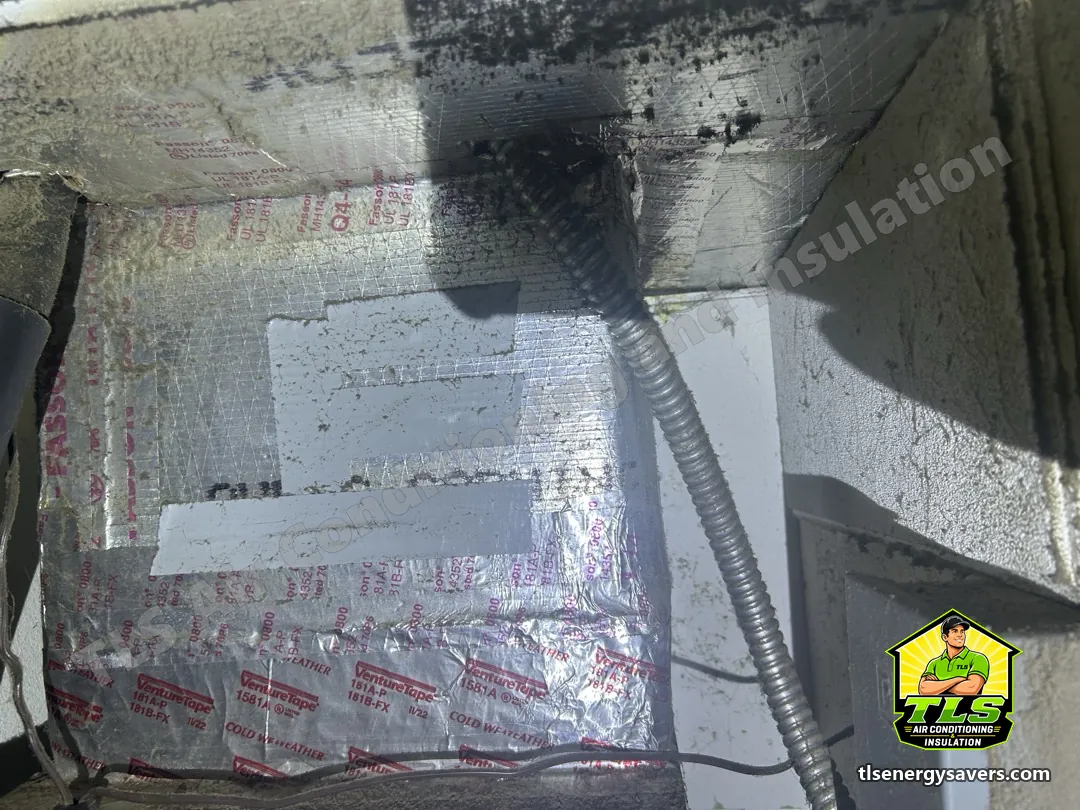
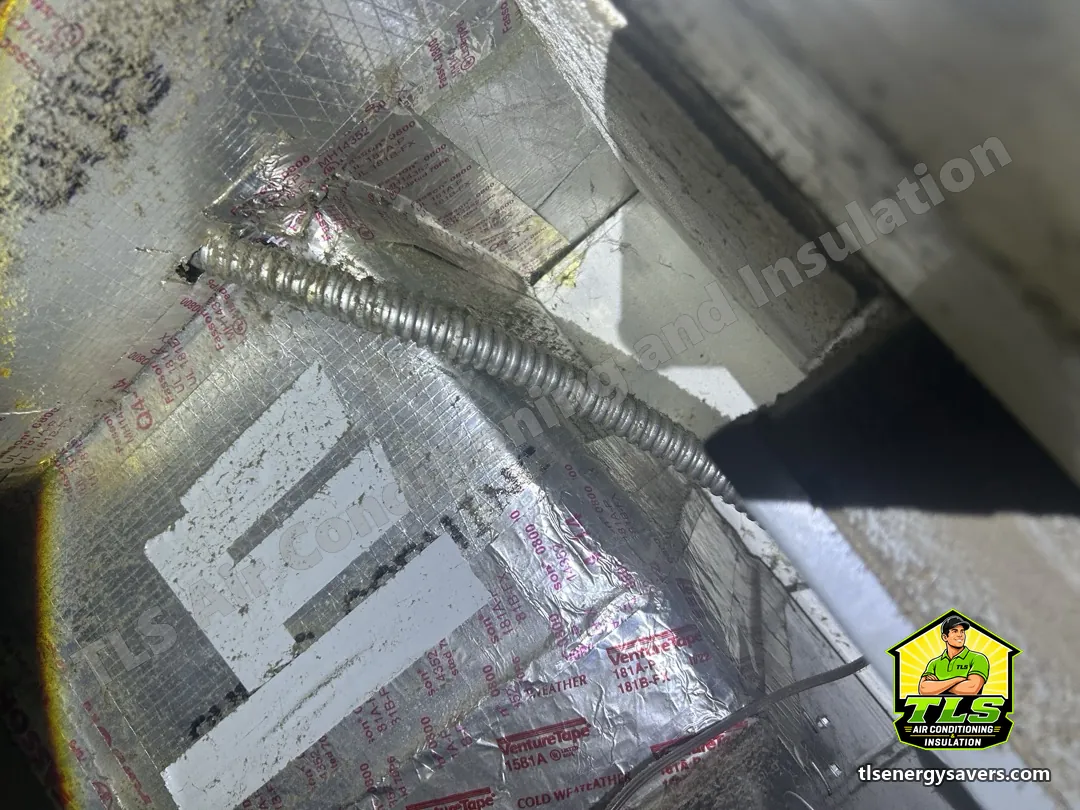
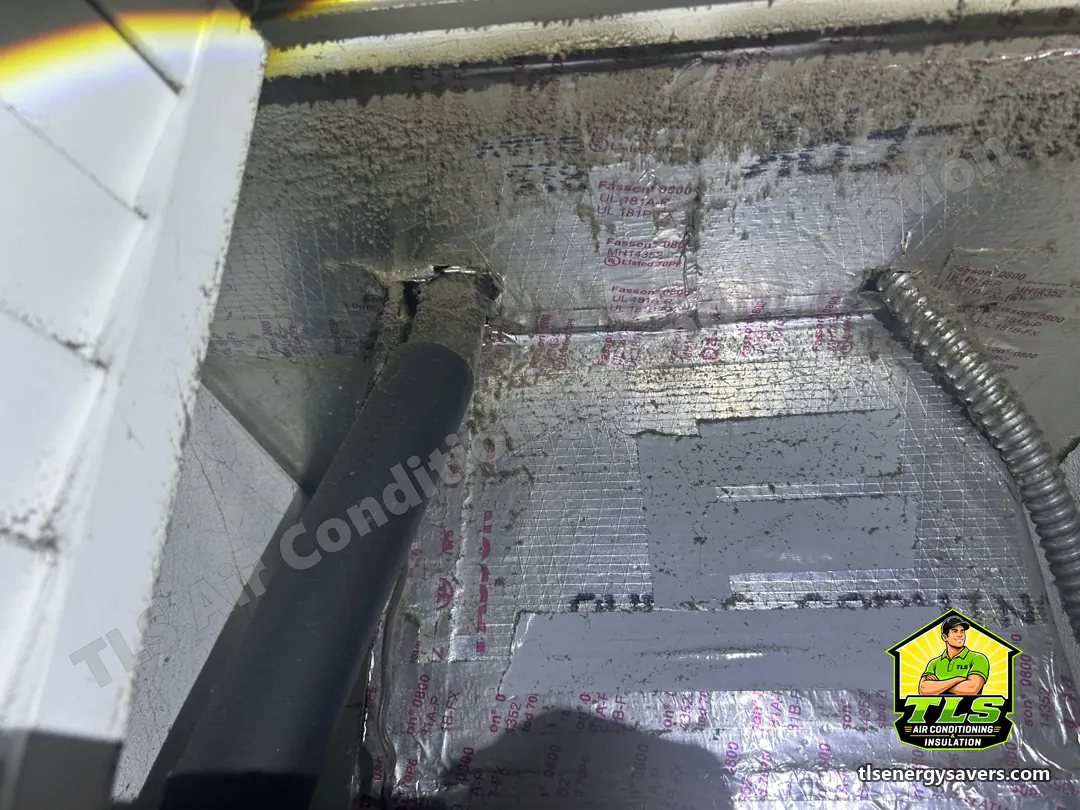
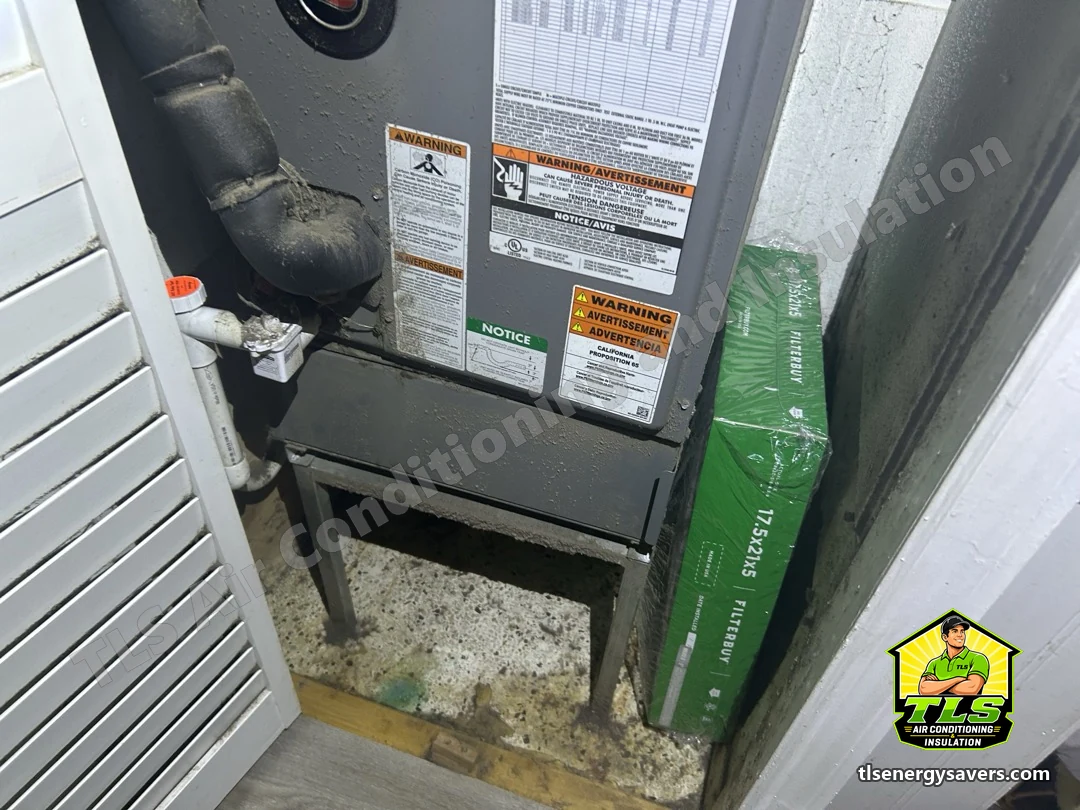
The chewed and torn lines in the attic are gone, so the cooled air the system makes reaches the rooms instead of leaking into the attic. Rooms that had been running warm at the end of damaged lines get their share again.
On the four flat-roof runs, the new line now runs from the distribution box to the edge of the flat roof, where it joins the original duct at a collar. That is the most of those runs anyone could replace without opening ceilings, and the homeowner knew that before the work began.
The coil is the next thing to watch. The growth at the drain pan is noted on the job, with a recommendation to have the unit serviced before the next Florida summer.
Duct lines are often the first thing they chew. We can inspect every run and tell you what can be repaired, what needs replacing, and what can actually be reached.