

A large two-storey Largo home ran on two 5-ton systems, both worn out. Both came out and both were replaced with Daikin heat pumps and new R-32 air handlers, along with a new supply plenum built on site, and an air scrubber and UV light on each system.
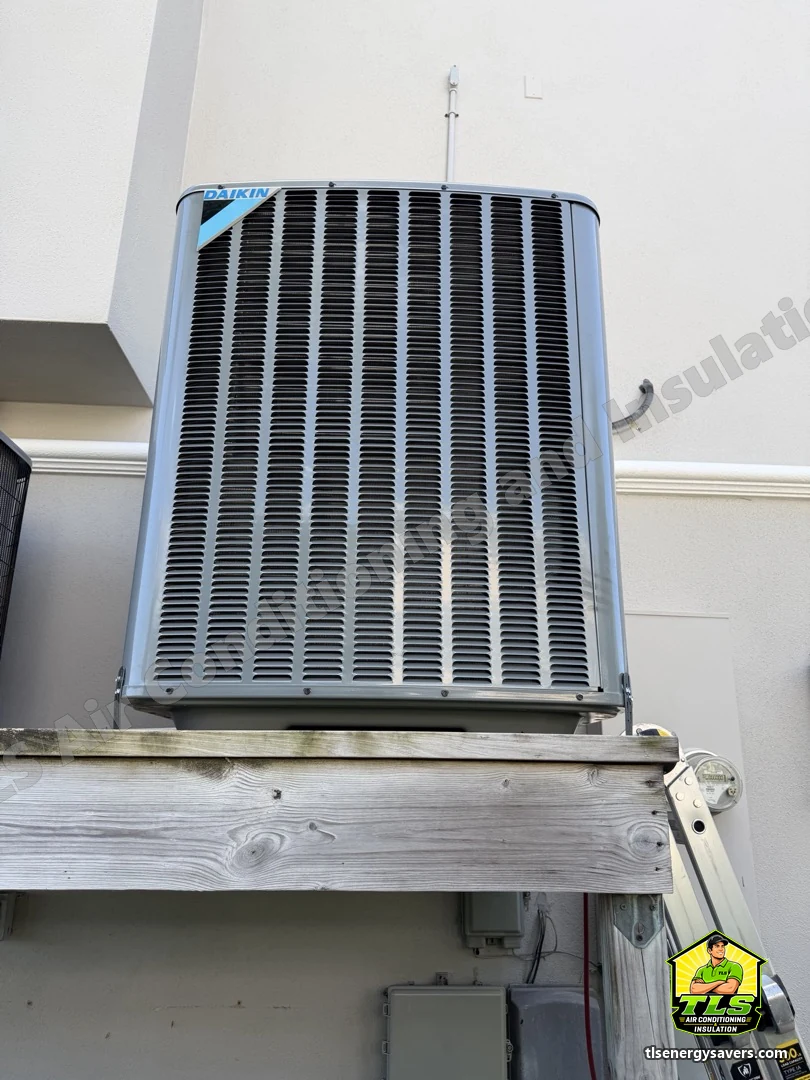
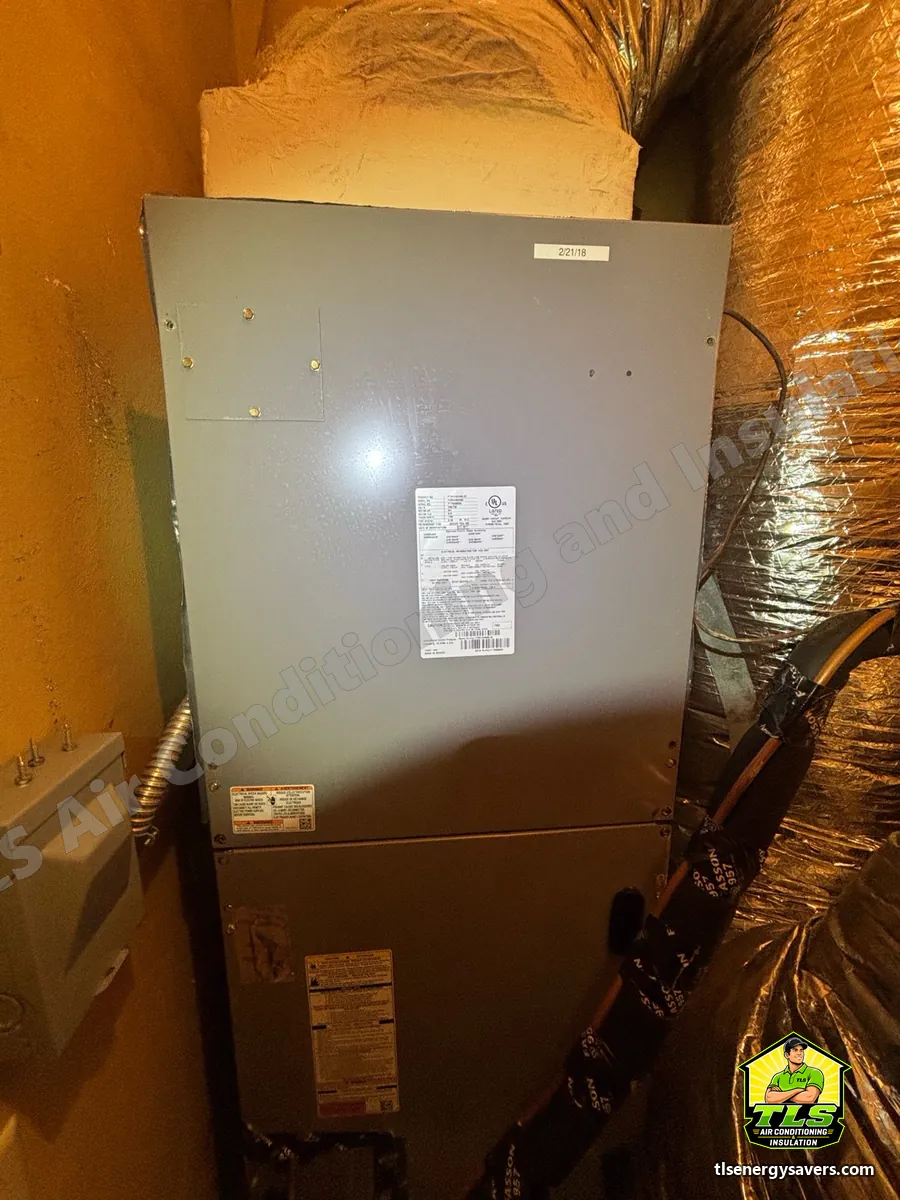
This is a big house, and it takes two full-size systems to cool it: one for each part of the home, each 5 tons. Both were old enough that the question was no longer whether to replace them, only how.
The homeowner chose to do both in one job. That means one crew, one disruption, one start date for both warranties, and two systems that are matched in age instead of one new unit working beside a tired one. It is the same reason replacing both systems at once usually makes more sense than spreading it over two summers.
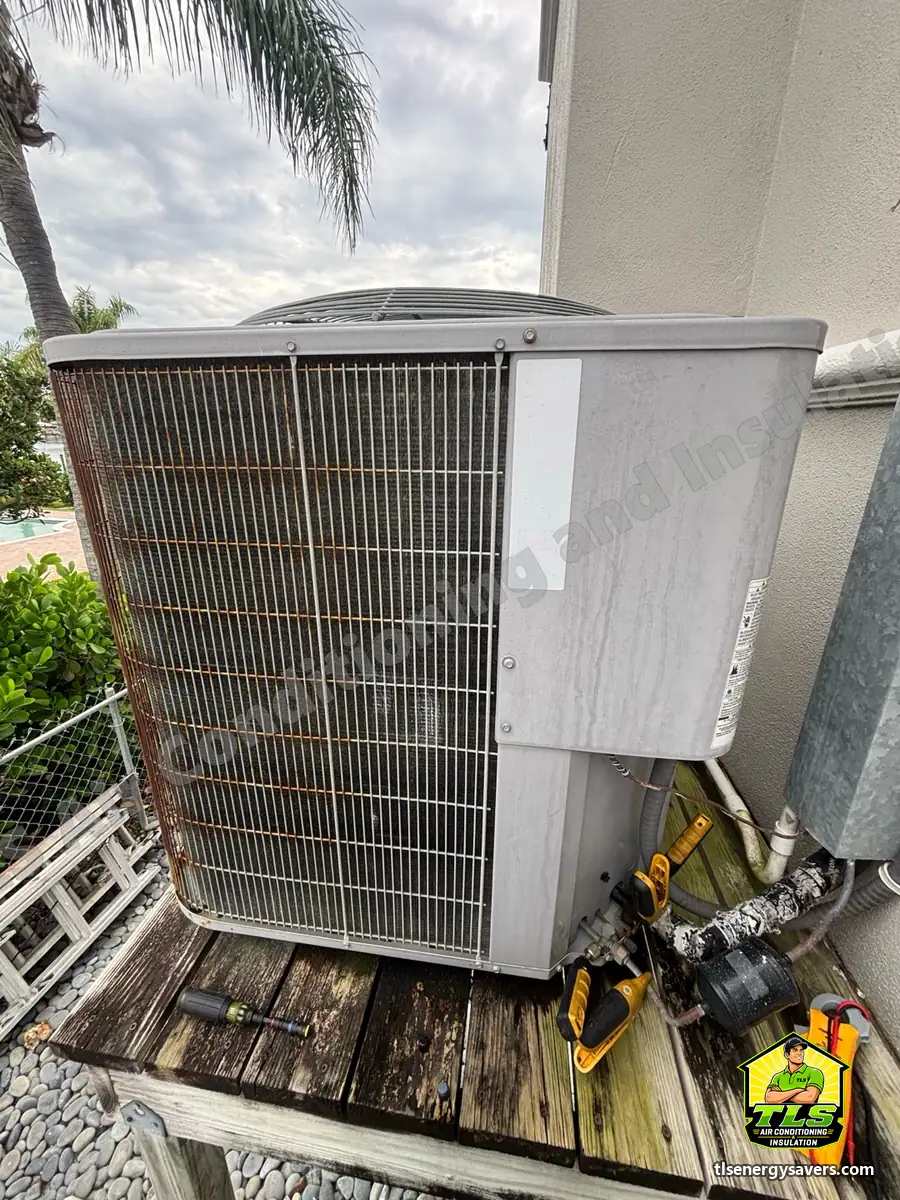
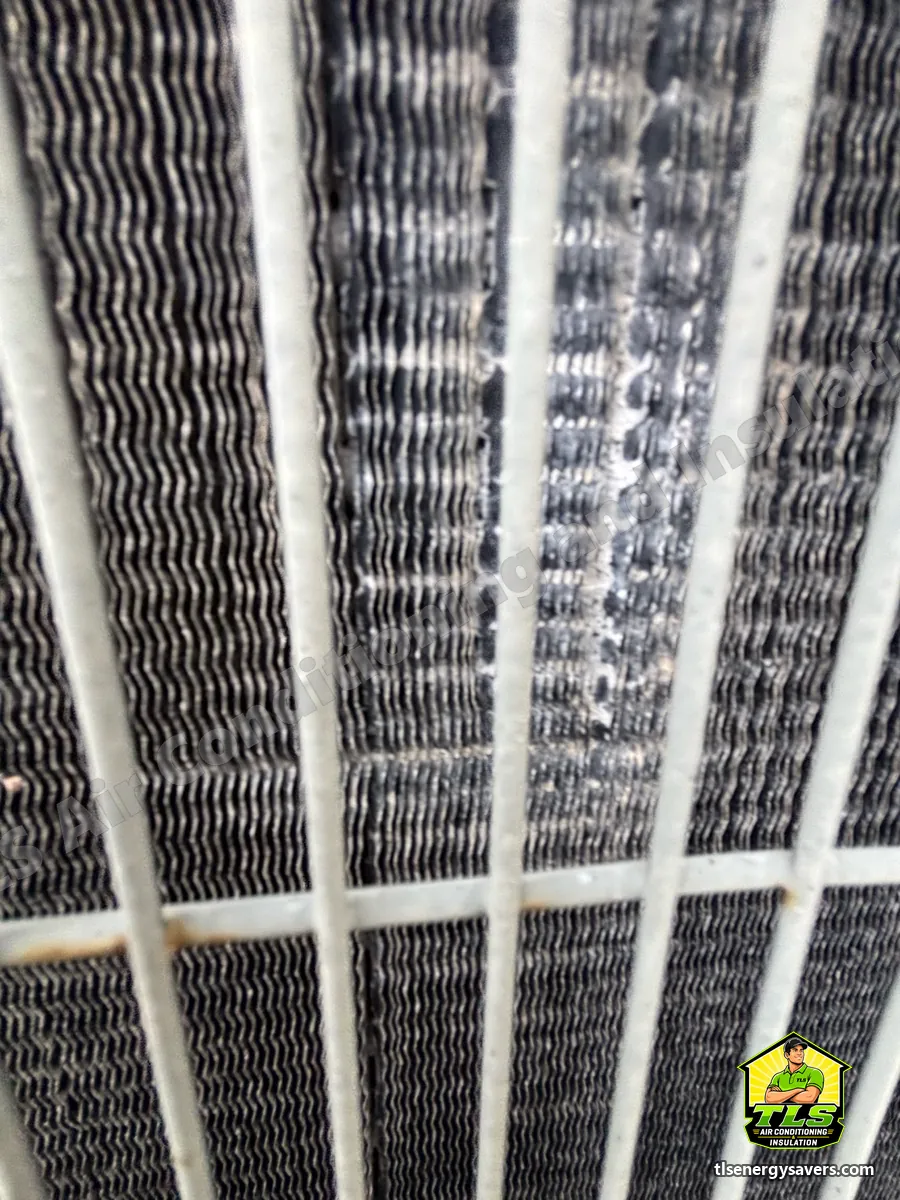
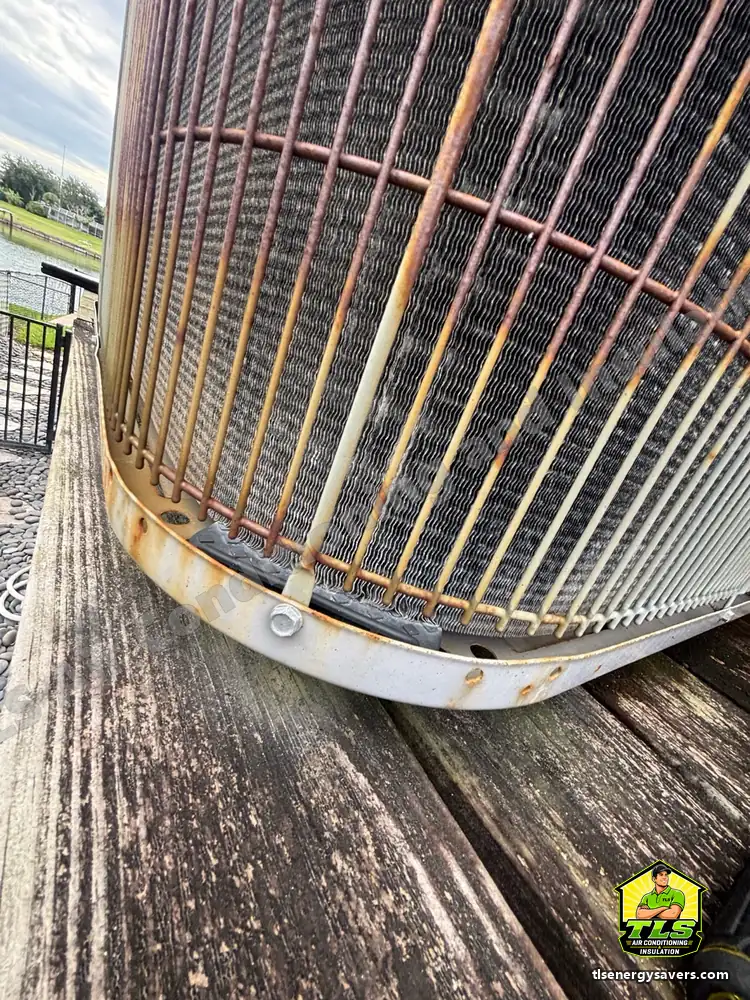
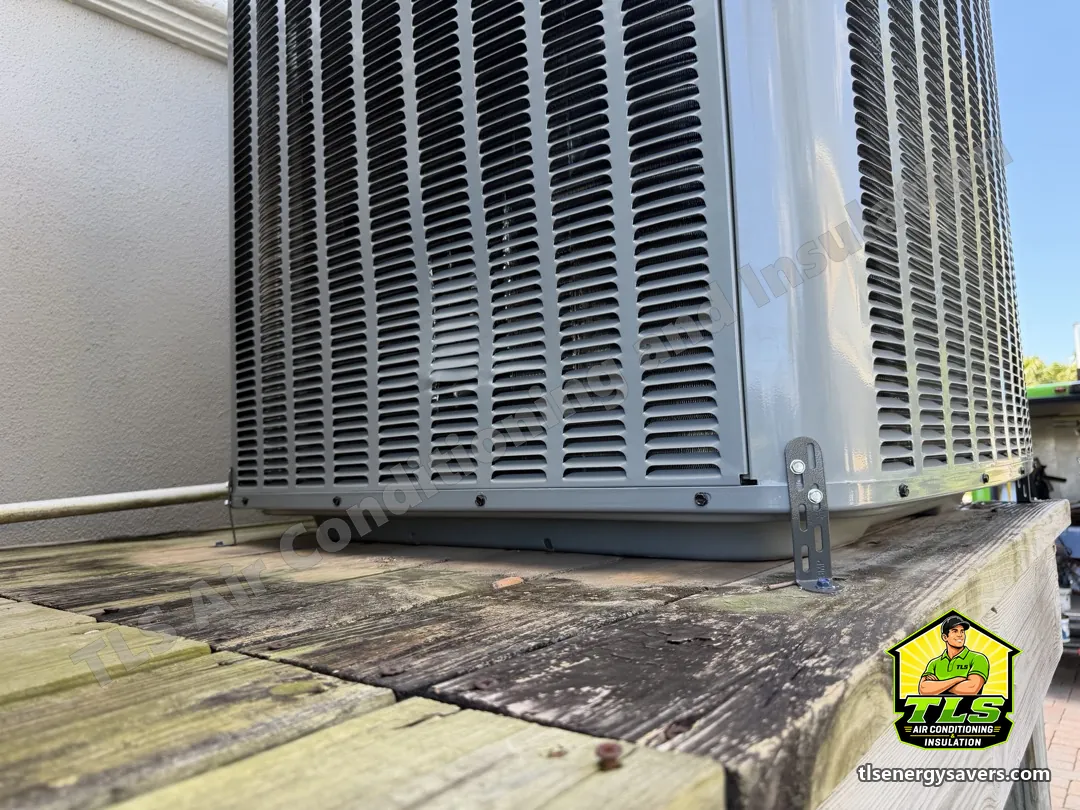
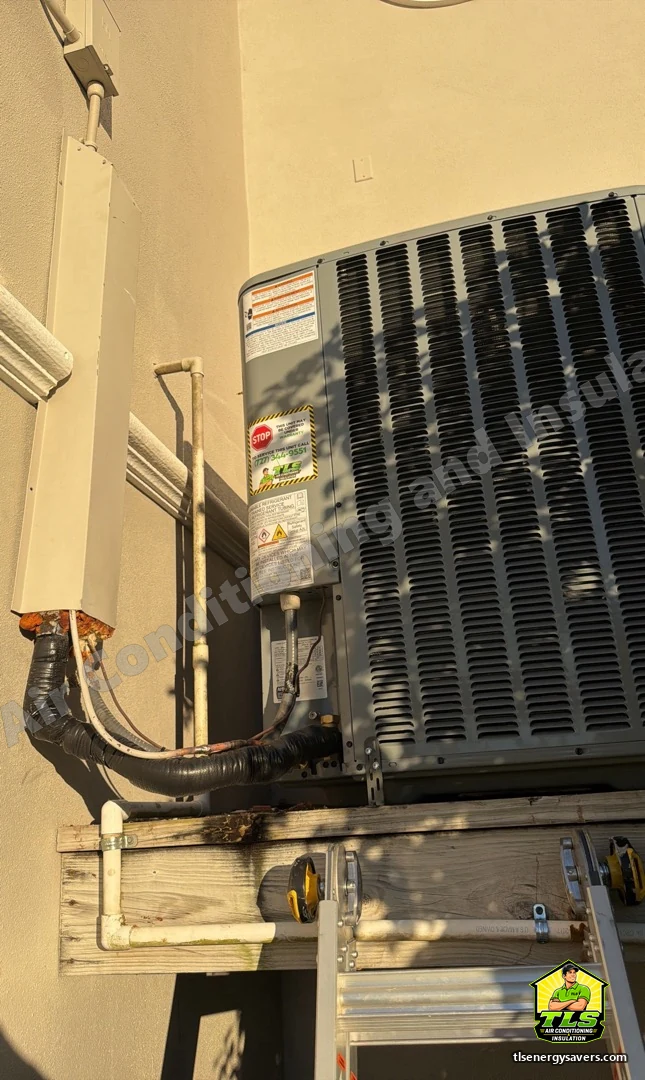
Outside, both condensers sat on raised platforms fixed to the side of the house. The coils had taken the worst of it. The fins were worn and packed with dirt, and the base of the coil was corroded. An outdoor coil in that state cannot shed heat properly, so the system runs longer for the same result.
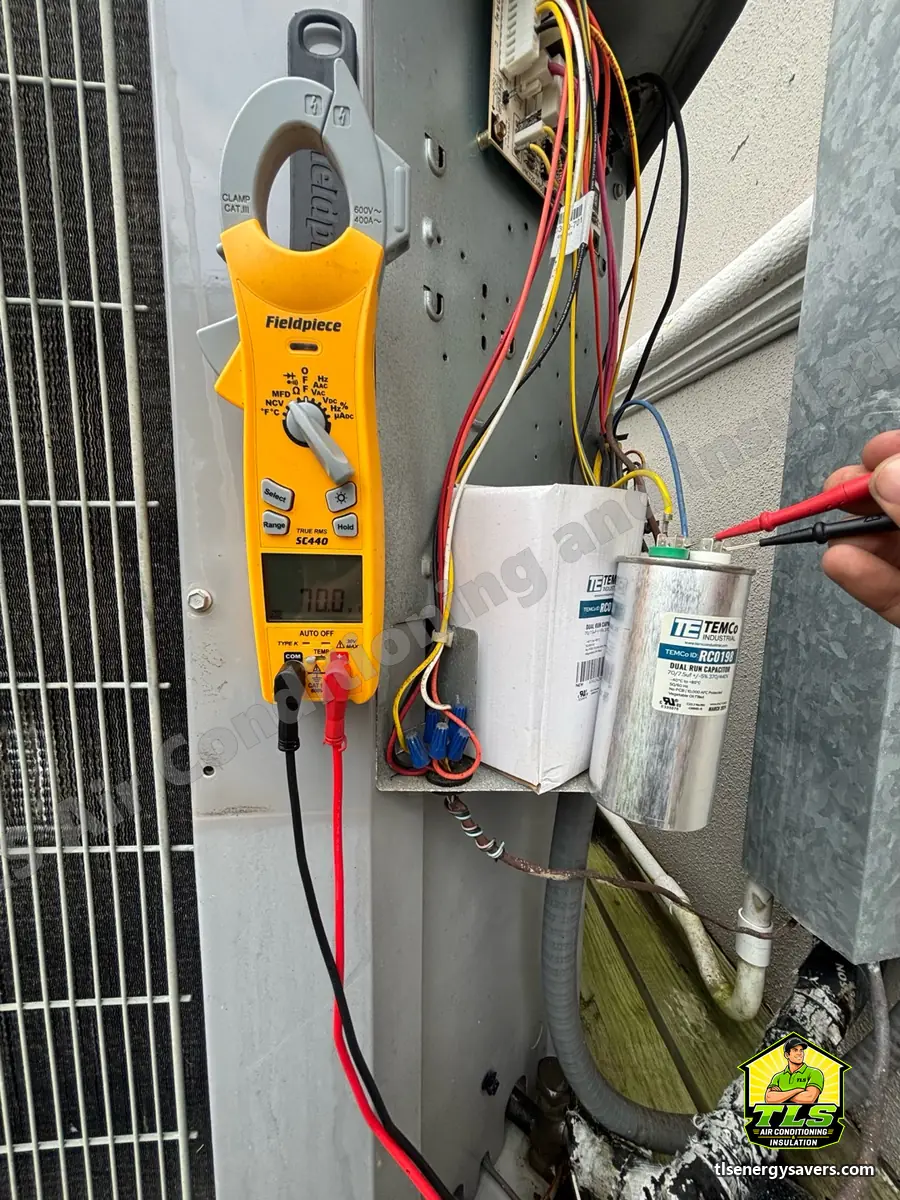
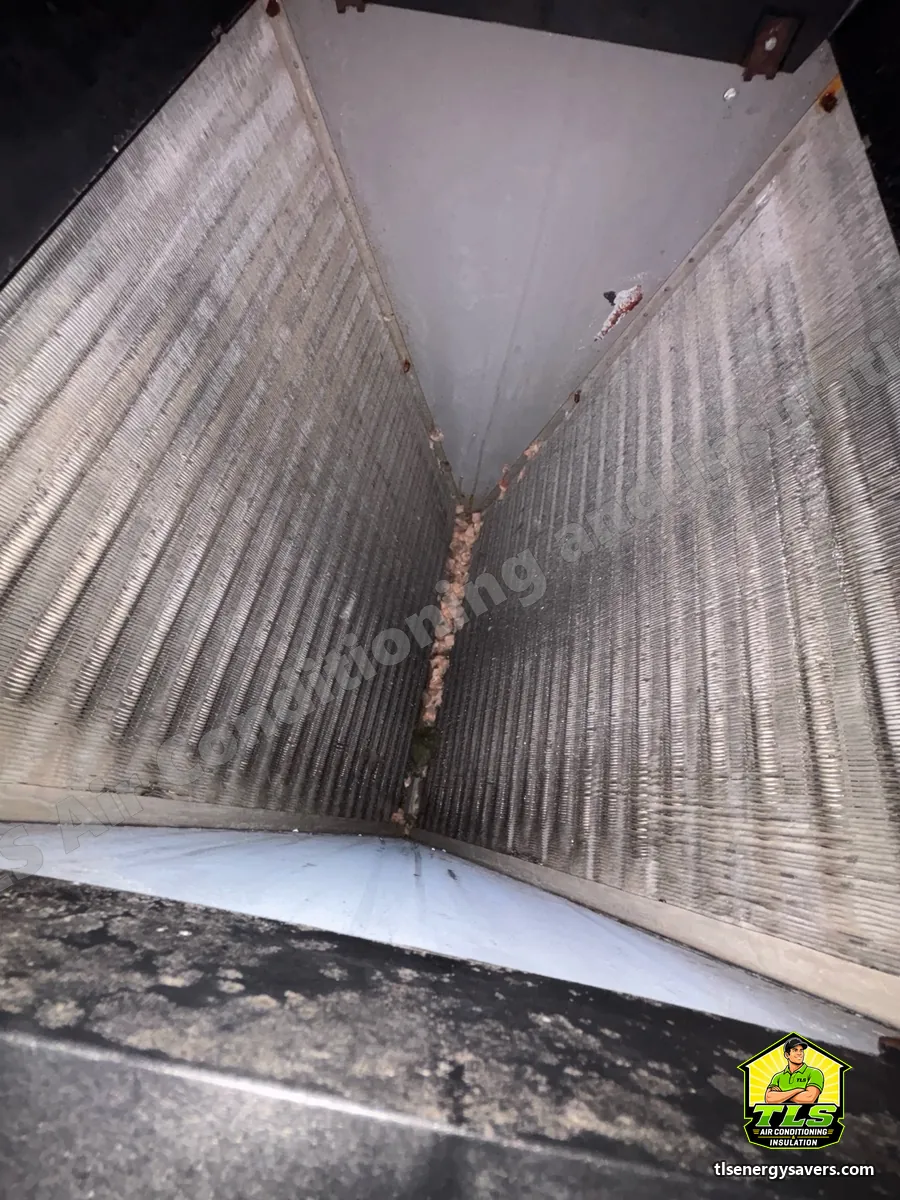
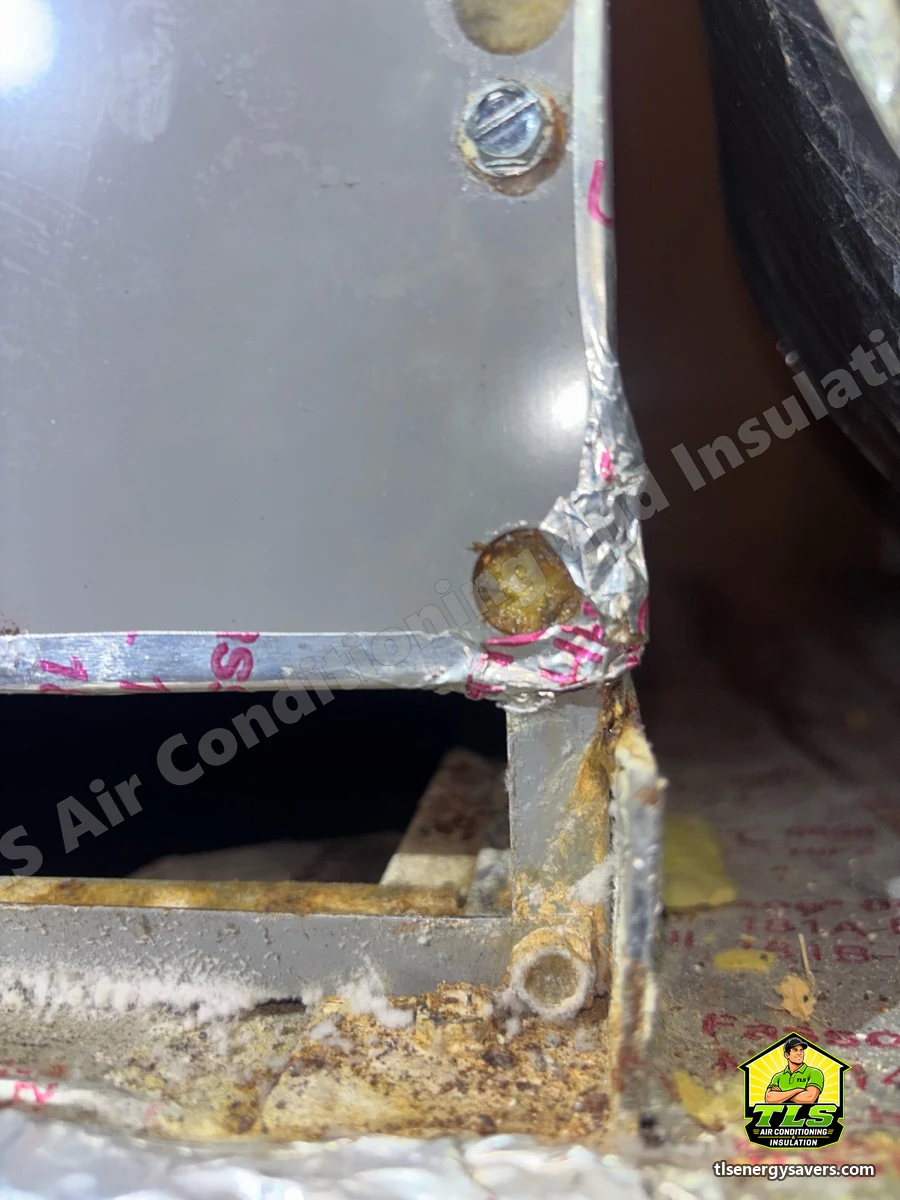
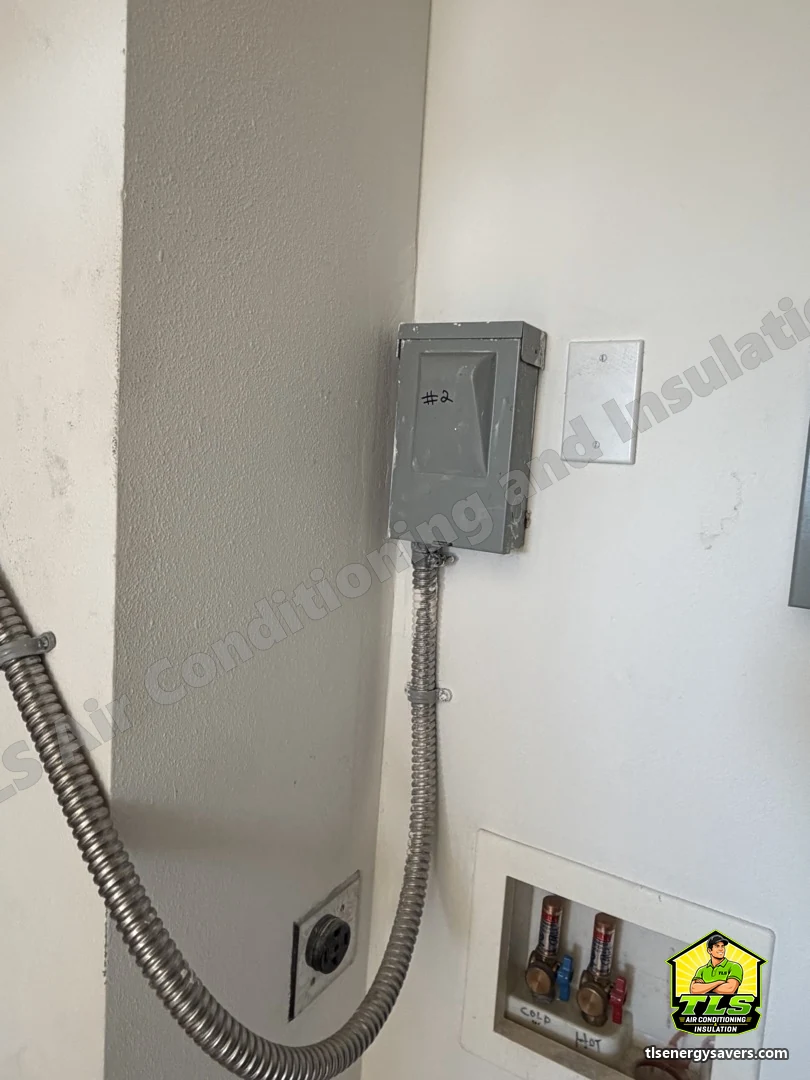
Inside, the air handlers told the same story. The indoor coils were dirty, and there was rust and residue around the base of the cabinets, where condensate had been sitting for years. The tech also took electrical readings on the old outdoor units on the same visit.
The replacement ran across two days, one system at a time.
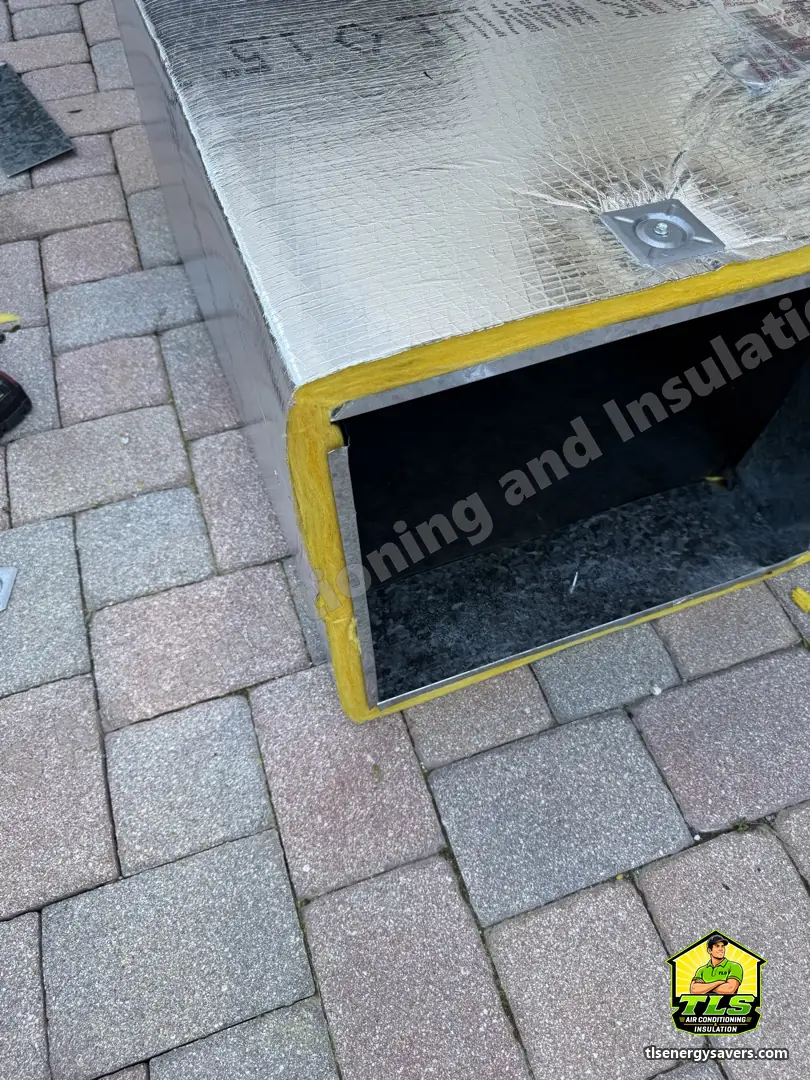
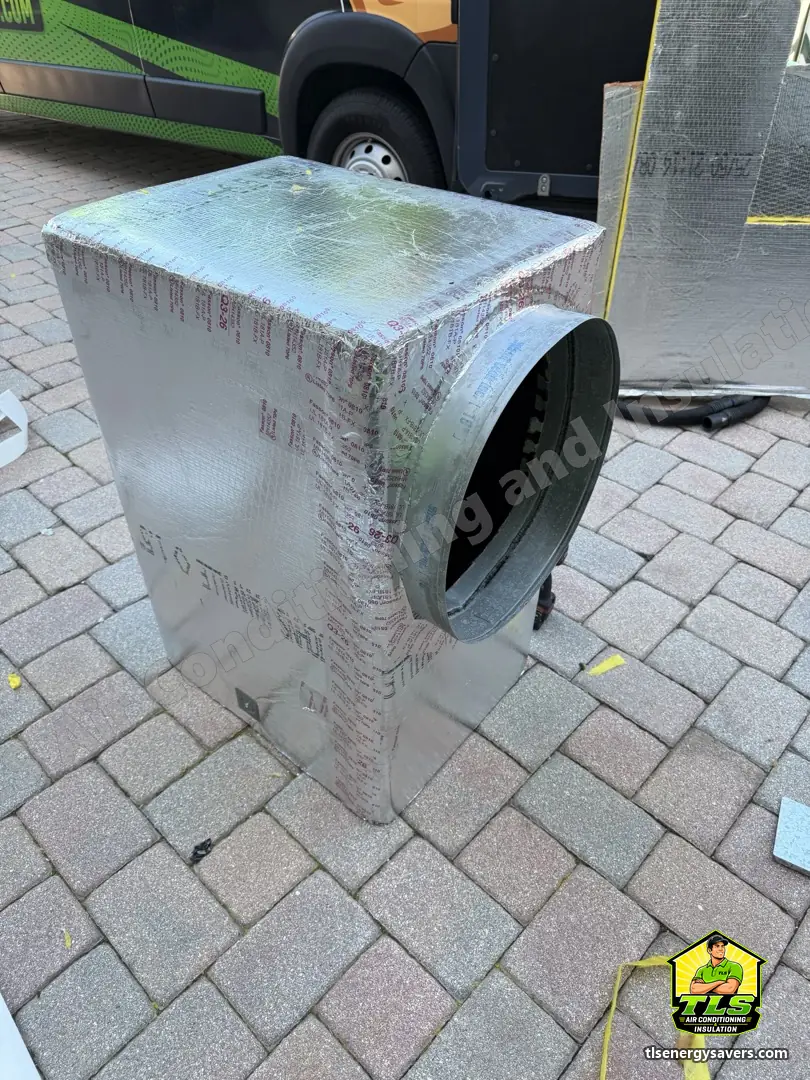
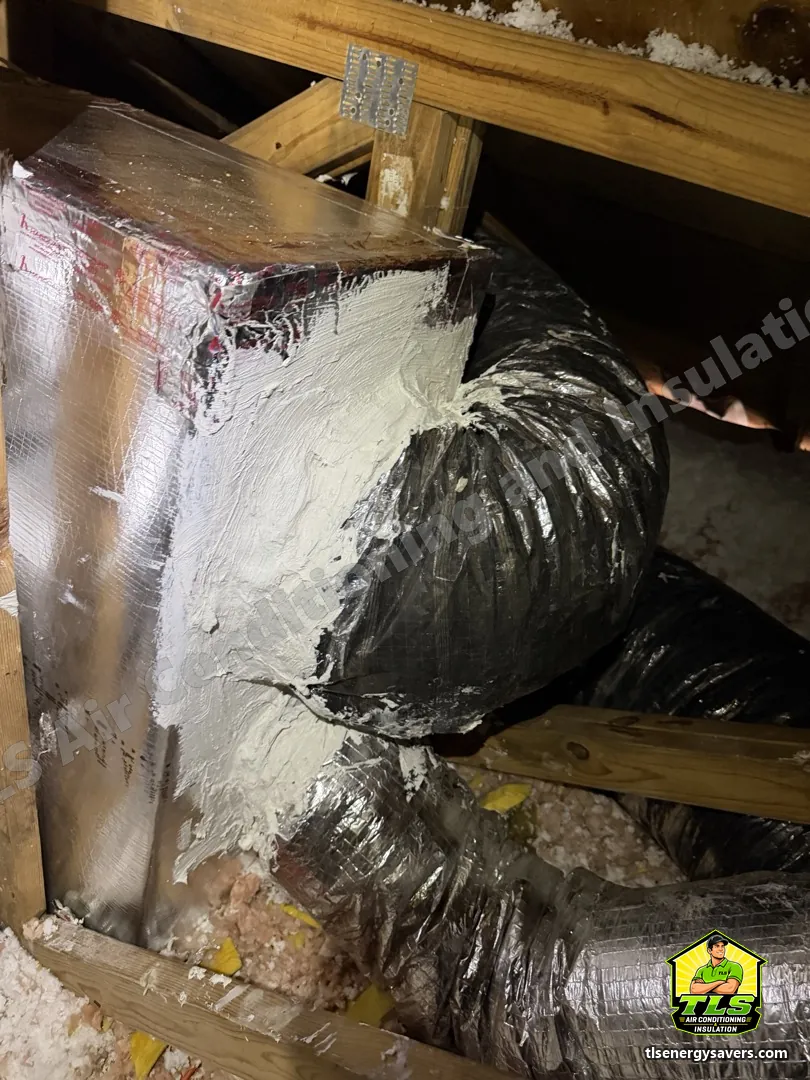
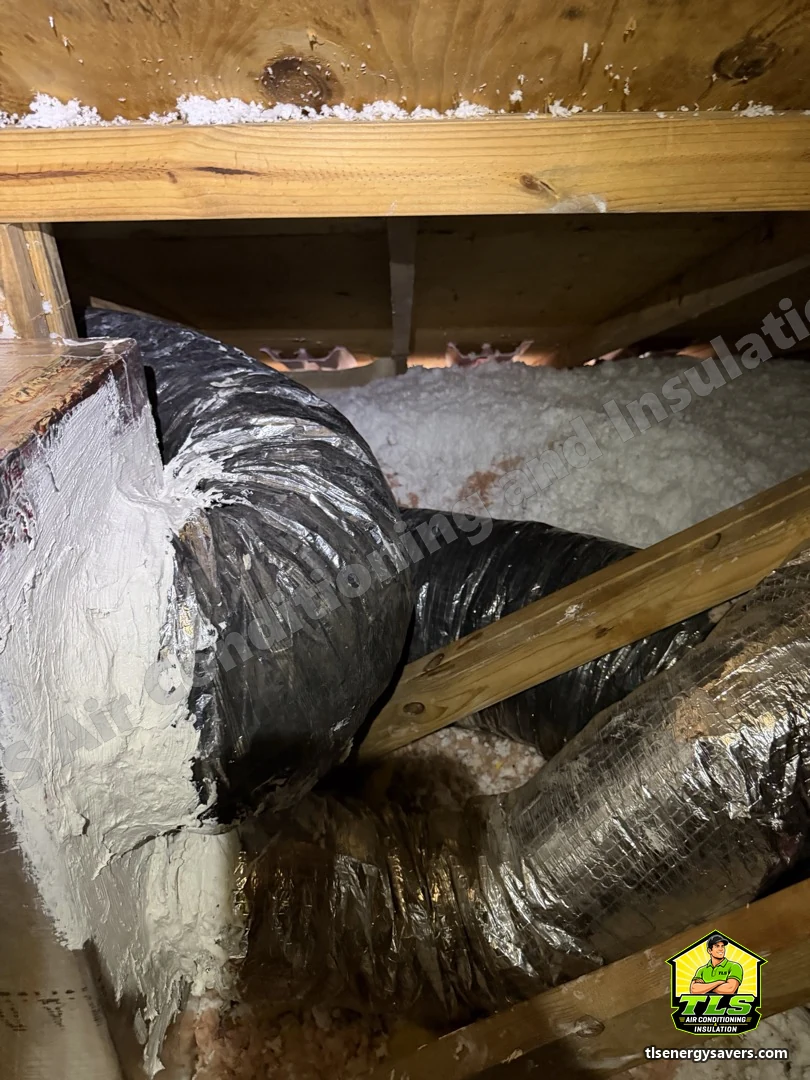
The plenum is the part most homeowners never see. It is the box on top of the air handler that every supply duct comes off, and on this job it was built new from duct board to fit the new equipment. Then every joint was sealed in mastic, the thick paste you can see in the attic photos. Tape on its own dries out and lifts in a Florida attic. Mastic stays put.
The float switch matters for the same reason it did on the old system. It sits in the drain line and shuts the system off before a blocked drain can overflow into the closet or the ceiling below.
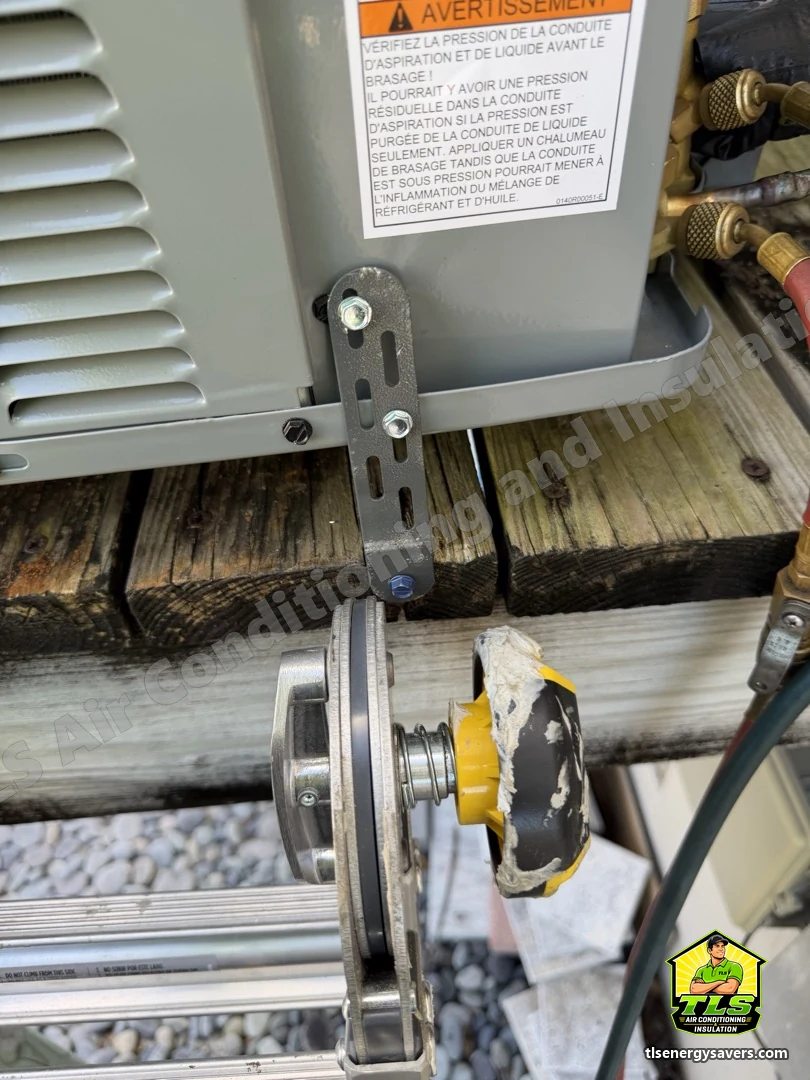
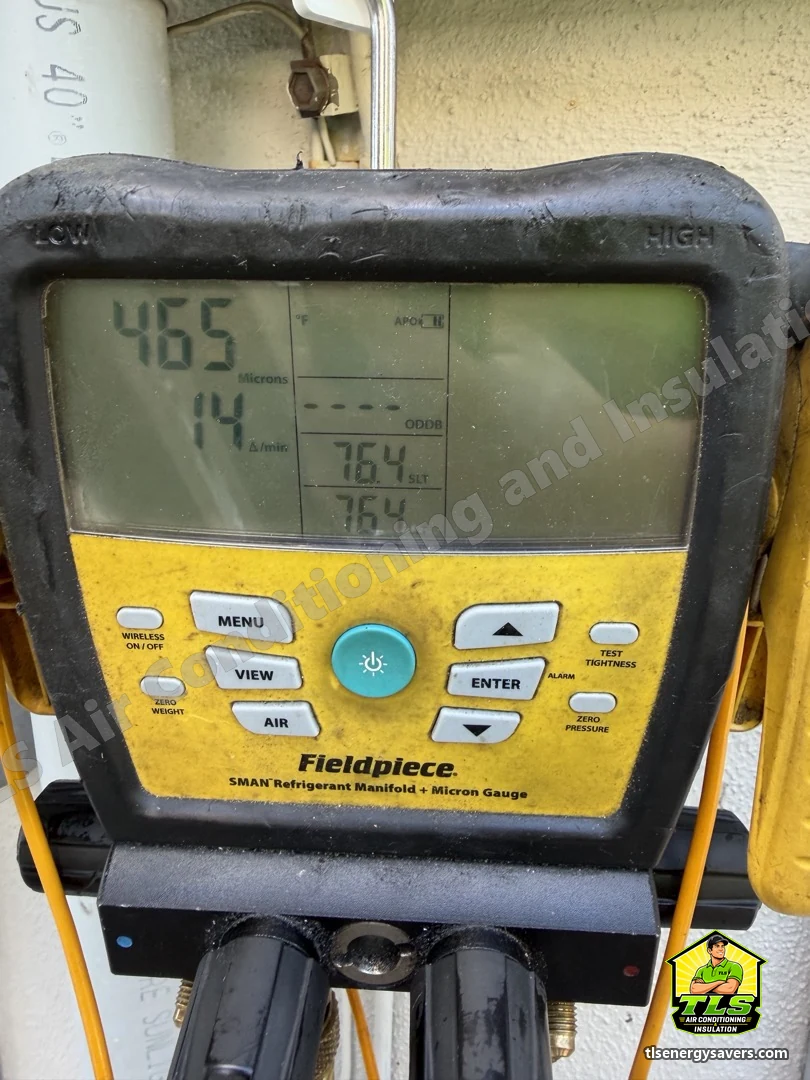
Twenty-nine photos. The first seven are the old systems from the inspection visit; the rest are from installation in October 2026. Click any photo to open it full size. Homeowner details have been removed; the city and ZIP have not.
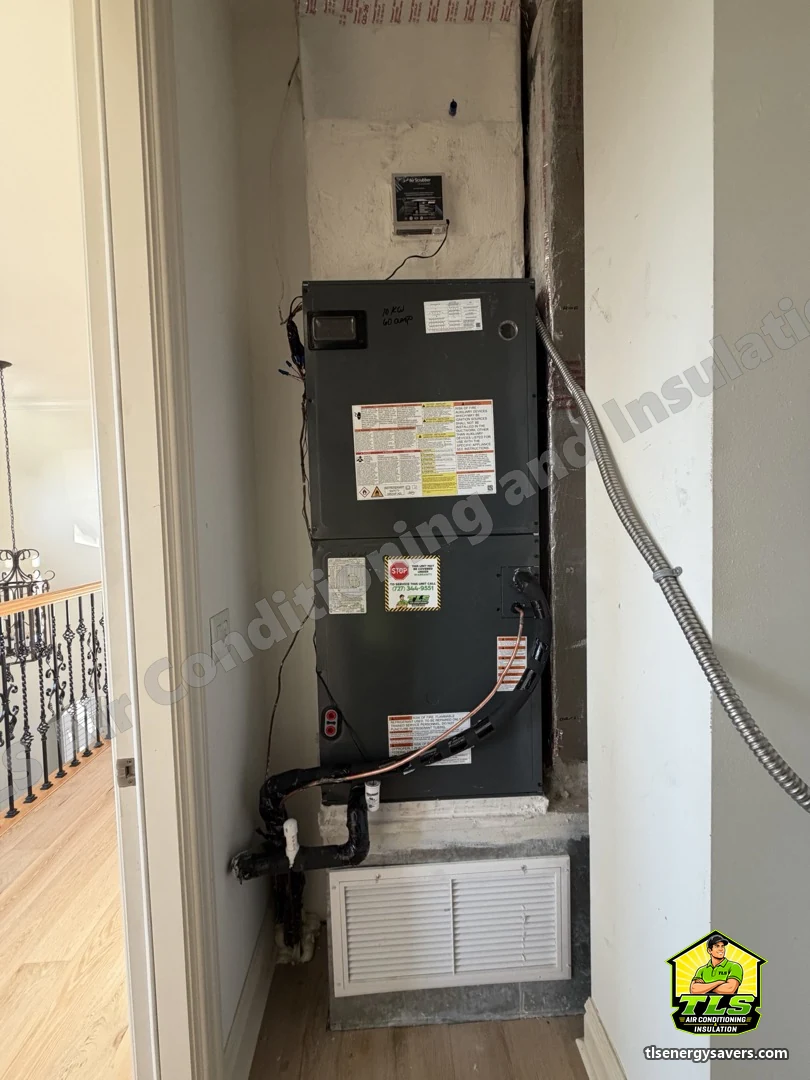
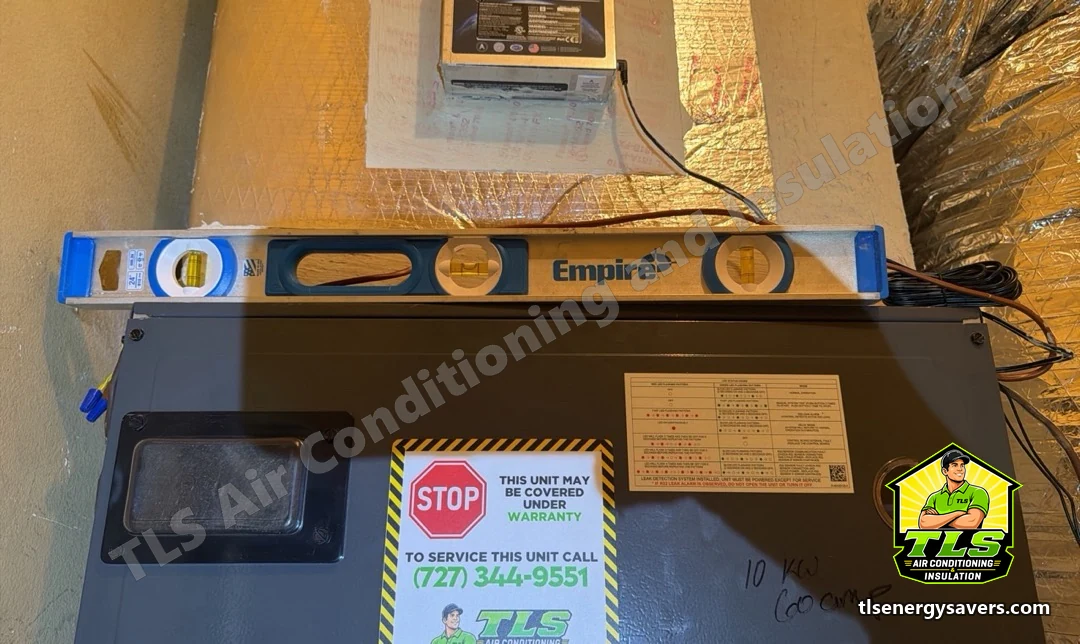
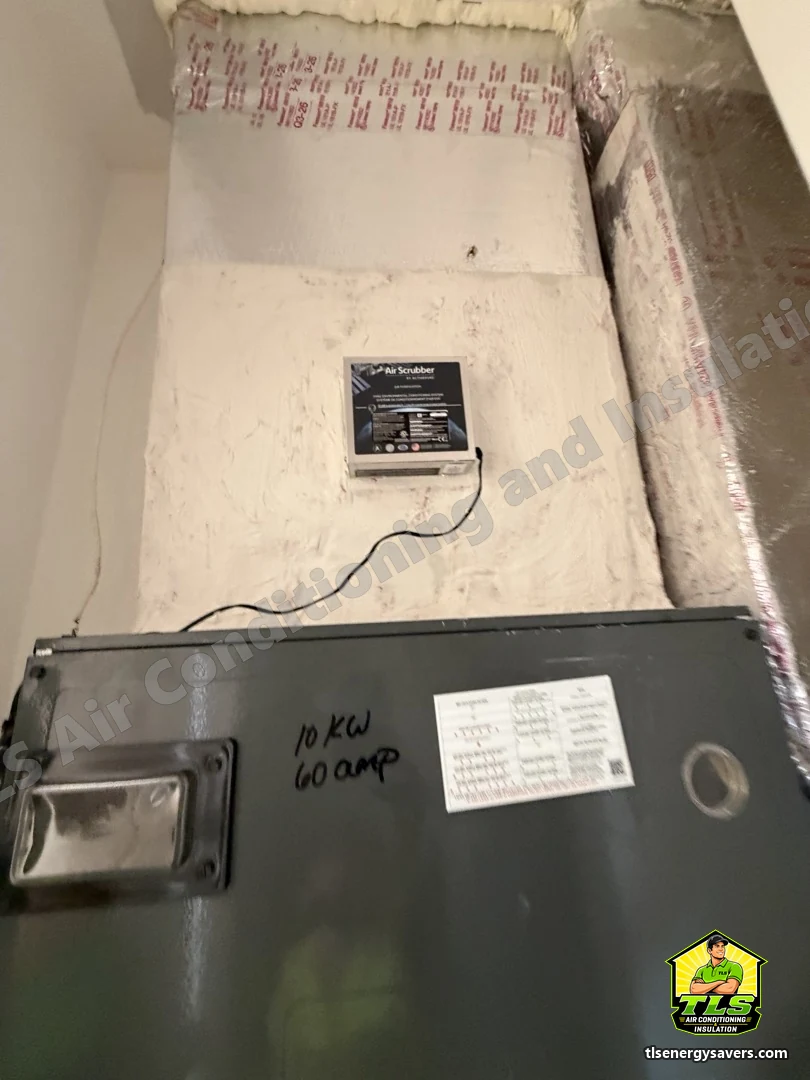
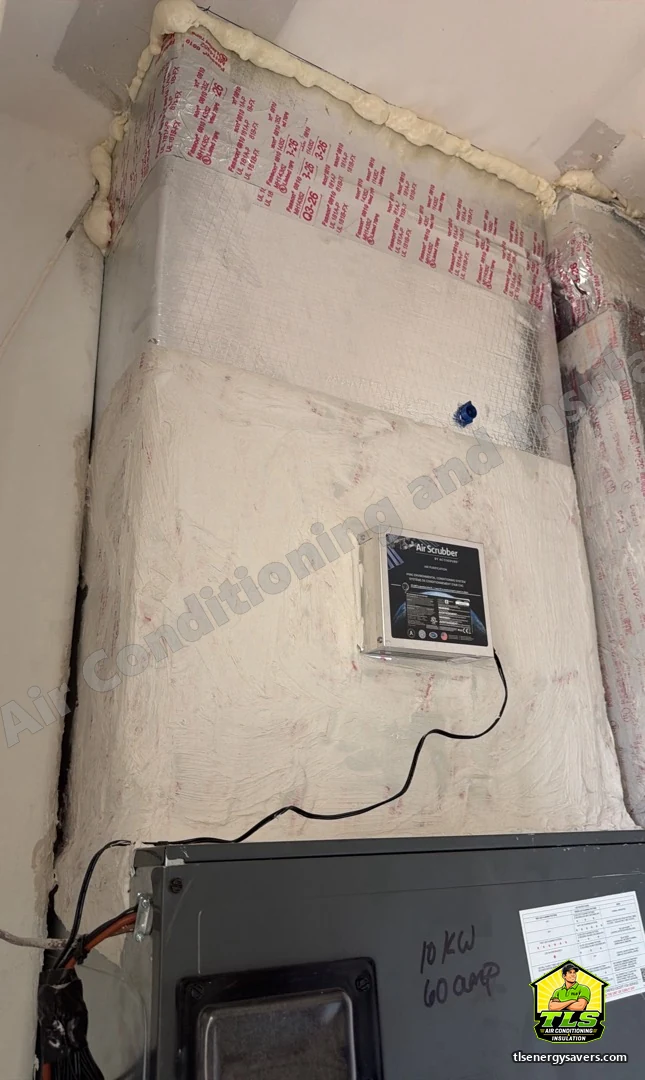
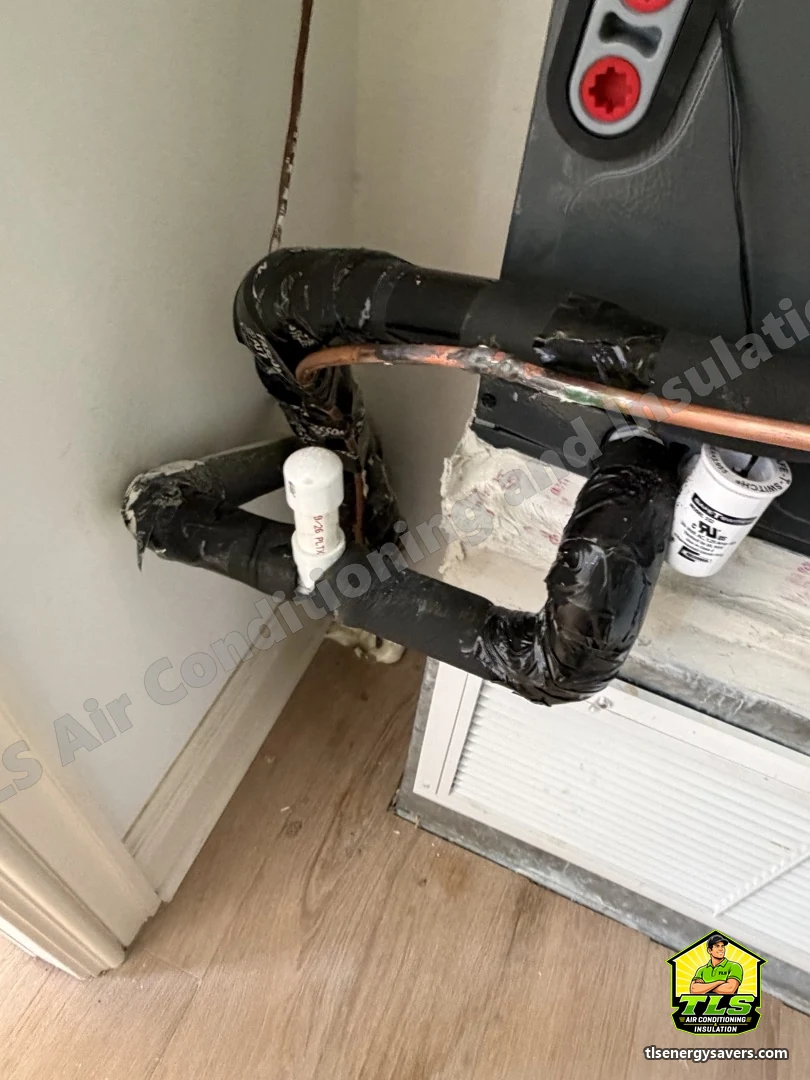
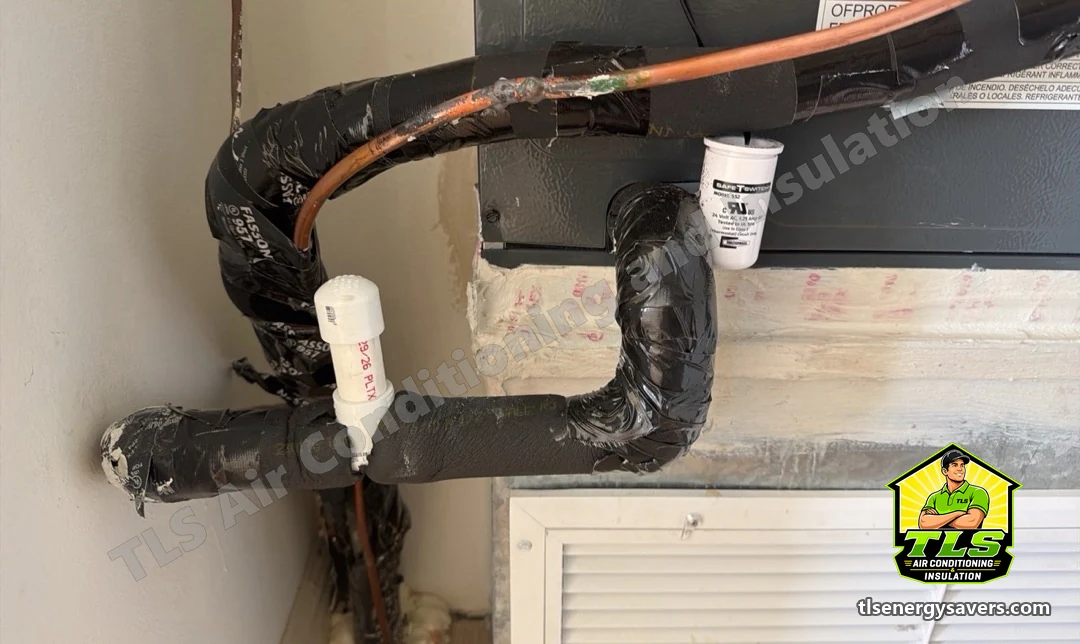
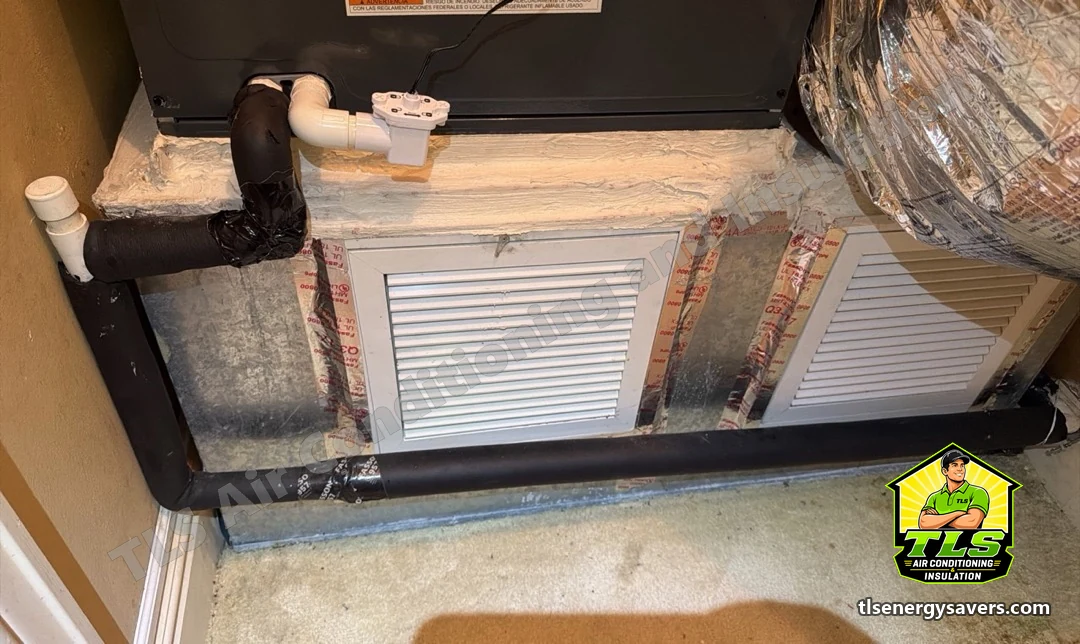
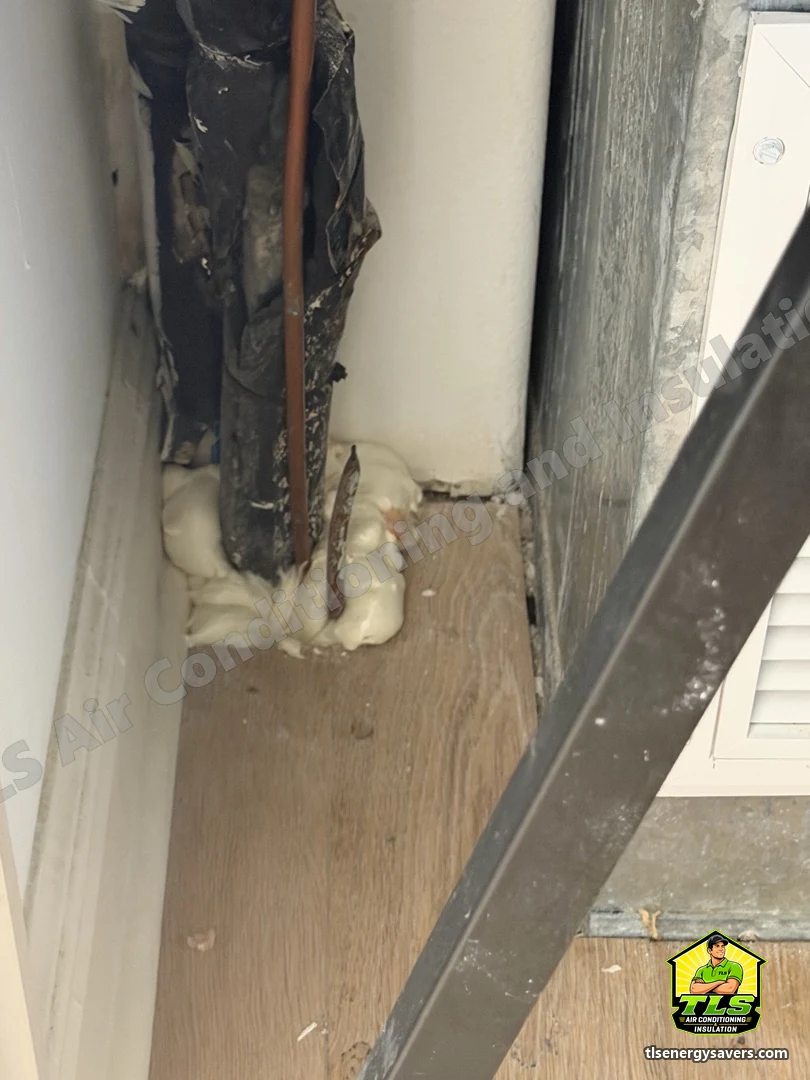
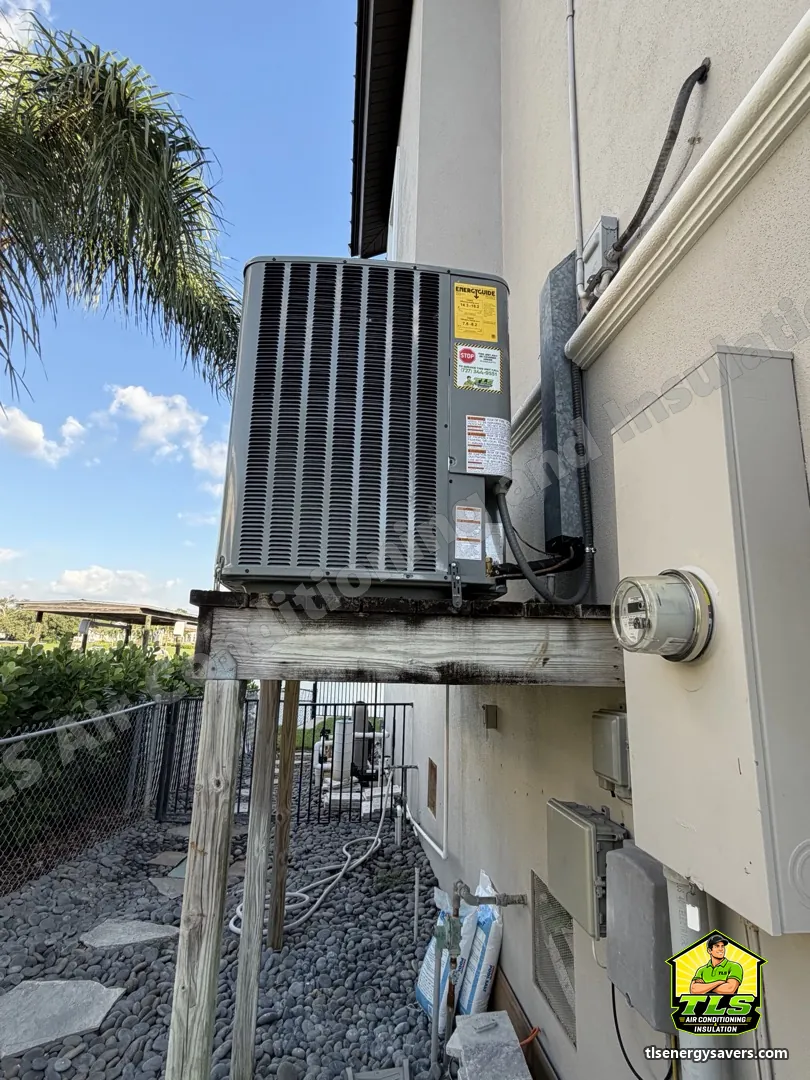
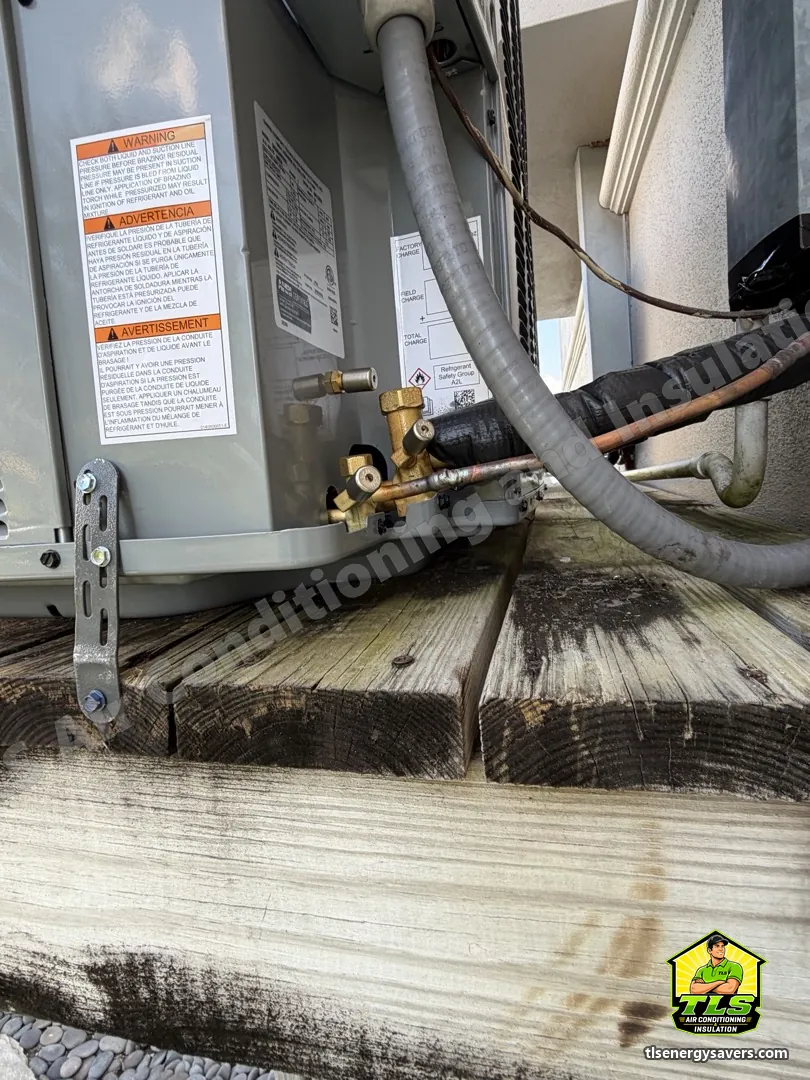
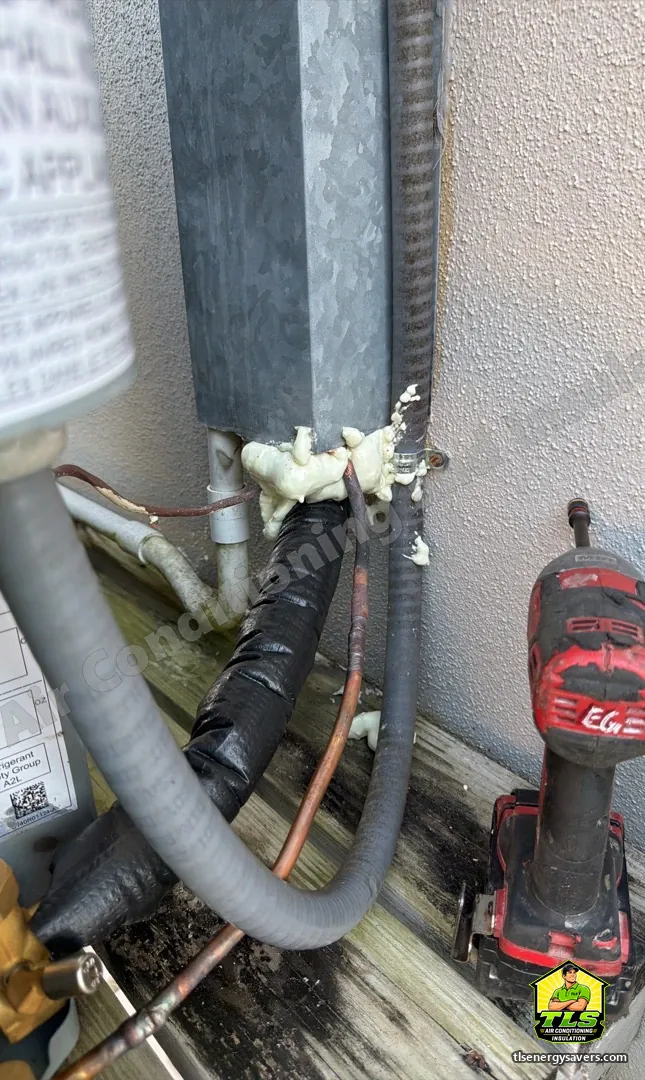
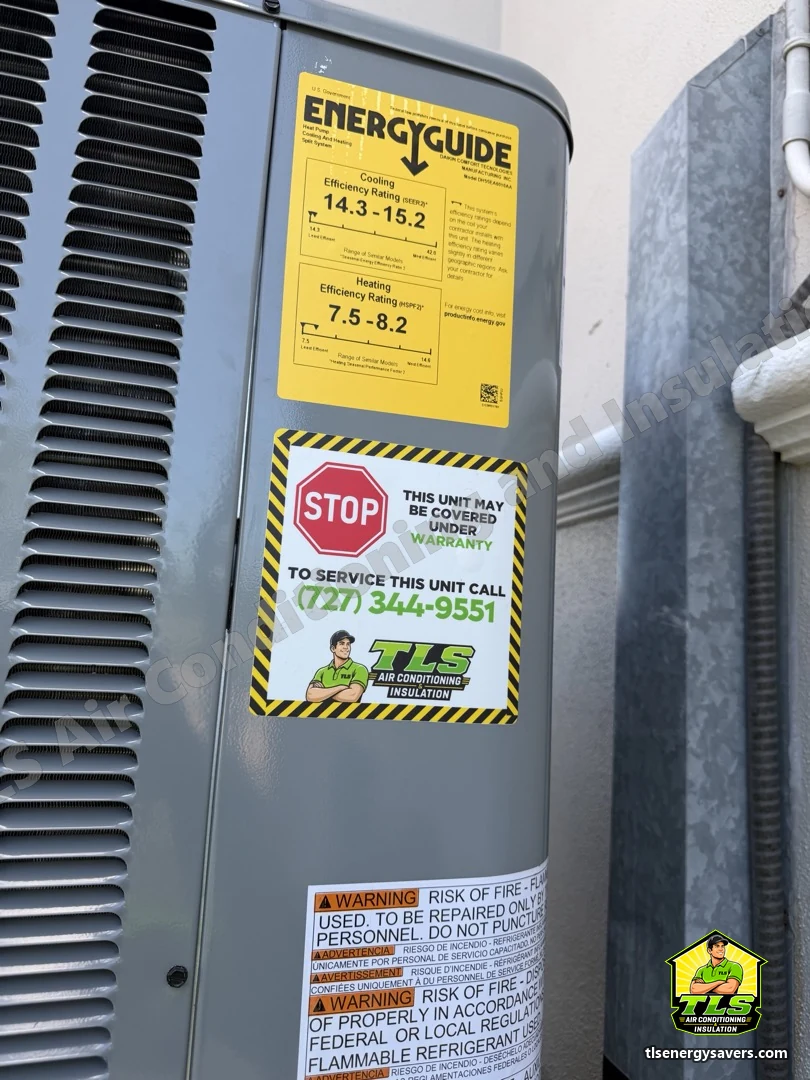
Both halves of the house now run on new, matched equipment with the same start date, so there is no weak system dragging the other down and one maintenance schedule for both.
The multi-speed air handlers move air more gently at lower speeds instead of running flat out every time the system starts, which is quieter and pulls more moisture out of the air in a humid Pinellas County summer. And because they are heat pumps, the same systems handle the cooler mornings in winter, with the heat strips there only as backup.
The parts behind the walls matter as much as the boxes outside: a new plenum sealed in mastic, a drain with a shut-off switch, and an air scrubber and UV light working on the air that goes through every room.
We will look at both, tell you which one has more life left, and price replacing one or both so you can decide.